Anti-Reflective Glass vs Anti-Glare Glass
Compare anti-reflective and anti-glare glass by optical effect, image clarity, lighting conditions, processing route, and project use.
Practical comparisons and specification notes for coated glass sourcing.
Showing 13-13 of 13 resources
Compare anti-reflective and anti-glare glass by optical effect, image clarity, lighting conditions, processing route, and project use.
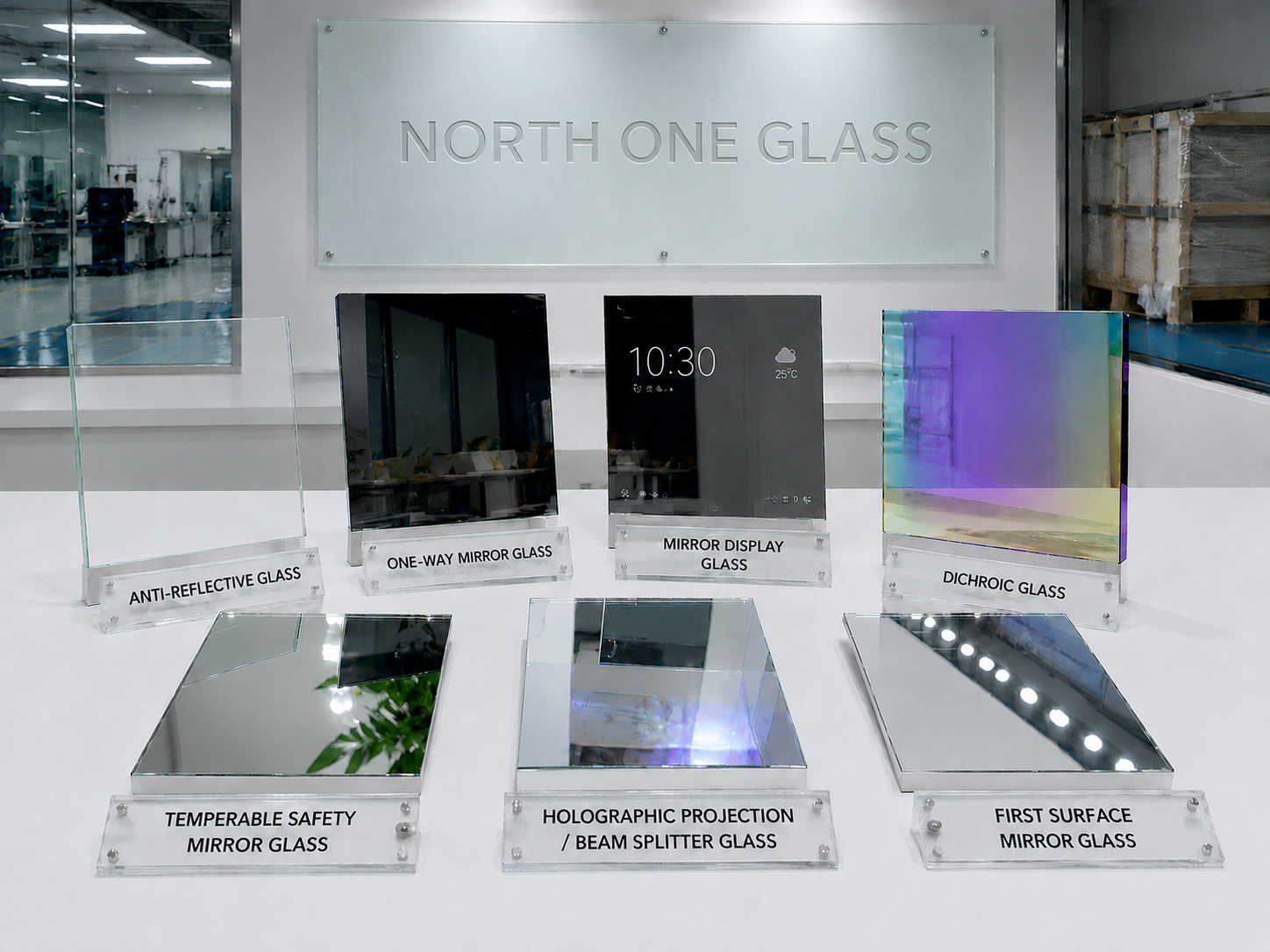
Compare coated one-way mirror glass with reflective film for observation rooms, privacy glazing, displays, and OEM projects.
Before buying one-way mirror glass, check the real room lighting, viewing side, coating direction, safety glass route, size, processing and installation details.
Understand the difference between a mirror coating that can enter a tempering process and a mirror panel that has already been tempered.
Compare coated dichroic glass and color-shifting film for architectural, landscape, display, and decorative projects.
Compare mirror display glass and observation-grade one-way mirror glass by optical balance, lighting, use case, and system integration.
Compare T70/R30 and T65/R35 beam-splitter glass as optical components for HUD, exhibition, teleprompter, and projection systems.
Compare front-surface optical mirrors with conventional rear-coated mirrors for projection, imaging, scanning, and precision optical systems.
Anti-reflective glass uses multilayer optical coatings deposited by vacuum magnetron sputtering. The confirmed high-performance route reaches up to 99% visible transmission and below 0.5% reflection across 380-780nm, supports 700°C physical tempering and chemical strengthening, passes 5,000-cycle steel-wool testing and is designed for 20-year outdoor service.
AR glass is used for panoramic invisible houses, high-end facades, smart appliances, commercial display panels, anti-ghosting optical covers, museum showcases and luxury retail vitrines. This guide matches AR98, AR94, UV75 and UV99 routes to each scene and explains tempering, lamination, IGU construction, cleaning and export packing.
This buyer FAQ covers AR98, AR94, UV75 and UV99, confirmed price references, 99% transmission, below-0.5% reflection, 700°C tempering, 20-year outdoor durability, 5,000-cycle scratch testing, applications, samples, spectral matching, export packing and quotation preparation.
Before ordering one-way mirror glass, buyers should confirm lighting direction, observation side, thickness, finished size, safety processing, coating side, application, packing and destination. These details affect privacy performance, price, cutting yield, processing feasibility, breakage risk and installation result.
To get an accurate one-way mirror glass quotation, send each panel length, width and thickness separately, not only total square meters. Also include quantity, raw sheet or finished glass, processing route, application, lighting condition, viewing direction, indoor/outdoor use, destination port and trade term. These details affect price, cutting yield, safety processing, packing and final performance.