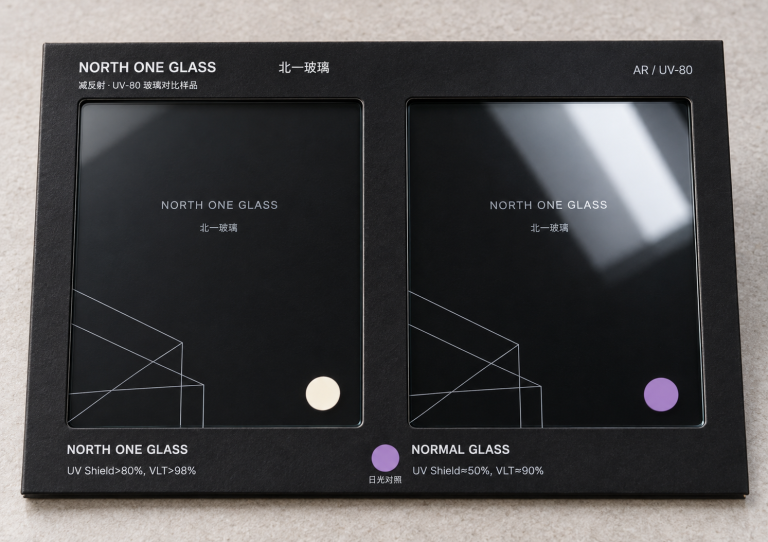
Does glass stop UV? Glass can reduce ultraviolet transmission. The amount depends on the substrate, thickness, coating, wavelength band and test method. For a framing or display project, select UV filtering glass using measured optical data for the final construction. UV Shield 80 combines defined UV blocking with anti-reflective performance. Compare the accepted sample, visible reflection, transmission and the stated UV measurement conditions before placing a panel order.
Which glass construction should I compare?
| Buying route | Information to compare | Project review |
|---|---|---|
| Clear glass | Substrate, thickness and measured UV transmission | Use the actual construction and required wavelength band. |
| Anti-reflective display glass | Visible reflection, transmission, coated sides and grade-specific UV data | Choose the viewing and finished-panel requirements together. |
| UV Shield 80 | UV blocking ≥80% over 280–380 nm using EN 410 weighting | Compare the labeled sample, optical record and final framing or display construction. |
Specify the wavelength band and test method
A UV figure should identify the evaluated band, weighting method, substrate, thickness and coated sides. For UV Shield 80, use the 280–380 nm range and EN 410 weighting on the matching optical record. Keep the UV result beside the visible reflection and transmission data so the glazing can be selected for both conservation and clear viewing.
Review the UV Shield 80 technical data and the public test report library with the selected glass construction and stated measurement method.
Match the glass to the artwork or display
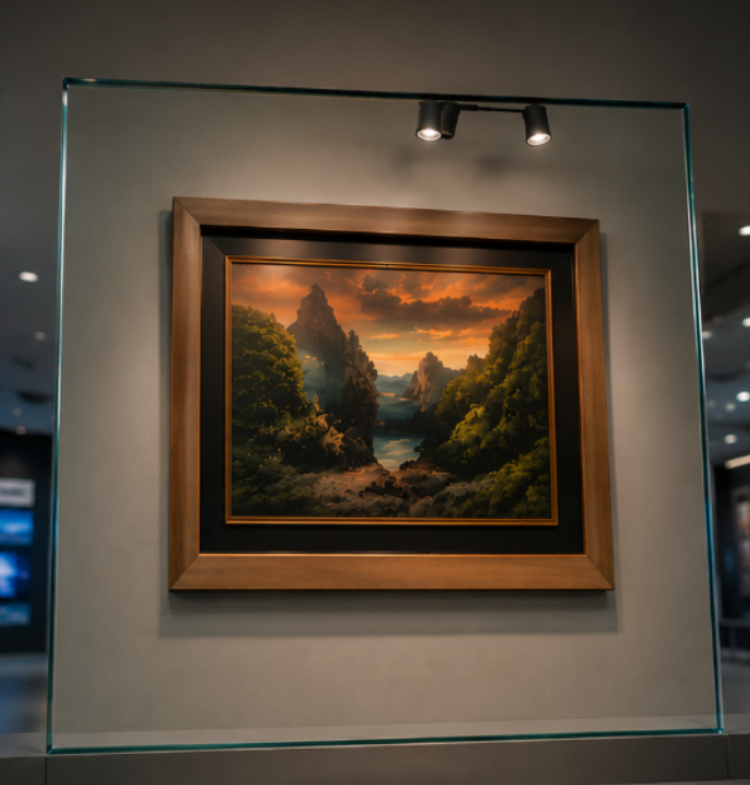
For picture framing, identify the artwork, glazing clearance, panel dimensions, thickness and installation. For a museum or retail showcase, include the viewing angles, lighting and the complete glass construction. A display-cover enquiry should include the screen and enclosure requirements alongside the selected optical grade. Evaluate a sample in the intended lighting before approving the finished panels.
Review processing and quotation inputs
Dimensions, cutting yield, edgework, holes, final construction, quantity and export packing affect the finished-panel quotation. Identify the required supply form and discuss any tempering or lamination with the selected coating grade. North One Glass combines optical coating development, in-house glass processing, sample evaluation and international delivery for the project.
UV filtering glass FAQ
Does glass stop UV and can ultraviolet light pass through glass?
Glass can reduce ultraviolet transmission, and the amount depends on composition, thickness, coating and the evaluated wavelength band. Some ultraviolet light can pass through a given glass construction. Select UV filtering glass by measured spectral data, the stated test method and the final assembly. Include visible light transmission and reflection when clear viewing is also required.
What should I compare for picture frames with UV protection glass?
Picture frames with UV protection glass should identify the glazing’s UV blocking, visible reflection, transmission and finished construction. Compare a glass or acrylic glazing sample with the actual artwork and lighting, and follow the selected material’s mounting and cleaning requirements. The complete conservation plan also considers light exposure, environmental conditions and display duration.
What data should accompany a UV protective coating?
A UV protective coating specification should state the reflection and transmission curves, evaluated wavelength band, weighting method, substrate, thickness and coated sides. Include the selected construction’s visible optical performance and the required finished-panel processing. Match the accepted sample and optical record to the quoted grade.
Review a sample and a project quotation
Send the application, selected grade, thickness, finished drawing, quantity, destination and required UV and visible optical data. Review UV Shield 80 UV-blocking anti-reflective glass, compare the anti-reflective glass grades, or read the anti-reflective versus anti-glare guide. Request a sample and project quotation with the actual framing or display requirements.