How Anti-Reflective Glass Works: Coating Principle, Grades and Quality Checks
Anti-reflective glass is made to reduce the light reflected from a glass surface while keeping the view through the panel clear. It is different from anti-glare glass: AR uses optical-film interference, while AG uses surface diffusion. The distinction matters when the buyer needs accurate color, fine detail, low ghosting and a clean view of an exhibit or display.
Manufacturing Route
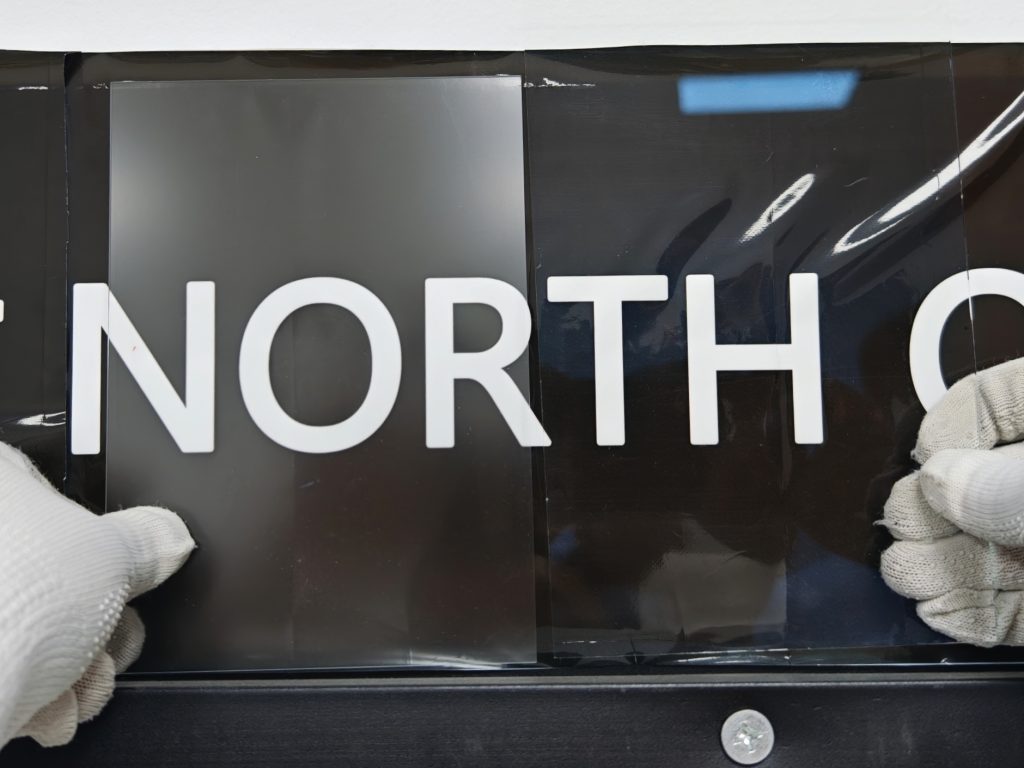
North One Glass starts with extra-clear low-iron float glass with confirmed iron content at or below 120ppm. The substrate is ultrasonically cleaned with deionized water, dried and sent into a 16-metre vacuum magnetron sputtering coating line. Alternating high- and low-refractive-index dielectric layers, including titanium oxide and silicon oxide, are deposited on one or both sides. When light reaches the multilayer coating, part of the reflected wave is cancelled by interference. More light passes through the panel and less of the room is reflected back toward the viewer. The result depends on the grade, substrate, thickness, coating side, wavelength range, angle and the complete installation. Ordinary uncoated glass reflects about 8% of visible light from its two surfaces and transmits roughly 89%-91%. The confirmed double-sided AR route reduces reflection to below 0.5% and raises visible transmission up to 99%, cutting more than 90% of the original visible reflection while preserving a near-neutral color balance.
What the Grades Mean
| Route | Buyer positioning | Typical reason to consider it |
|---|---|---|
| AR98 | Premium high-clarity double-sided route | Museum cases, artwork framing, premium displays, invisible houses and imaging |
| AR94 | Cost-effective high-transmission route | Large industrial-control and commercial-display areas |
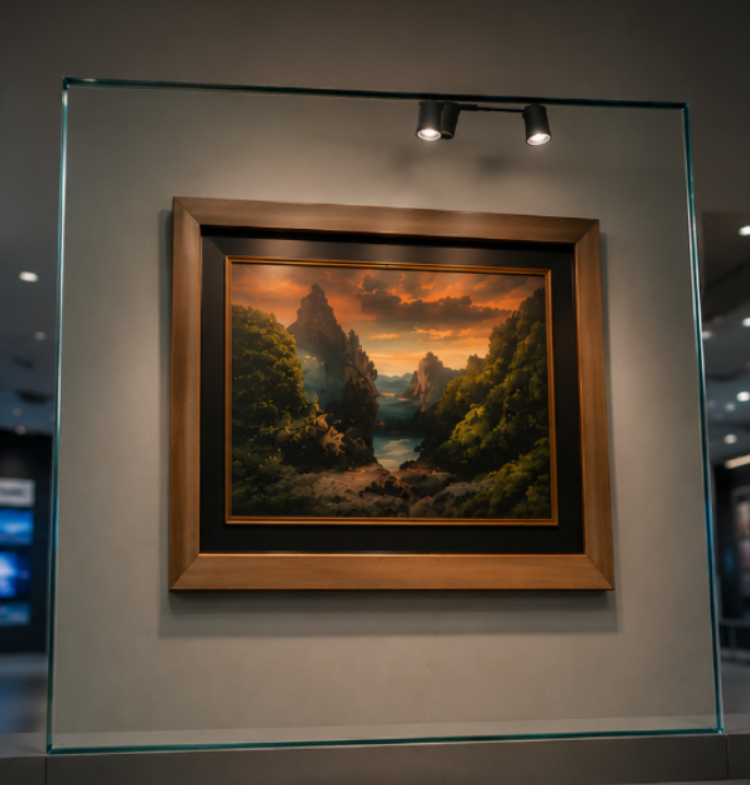
| UV75 | AR route with ultraviolet filtering | Paintings, paper archives, historical documents, textiles and valuable exhibits |
| UV99 | Premium ultraviolet-protection route | National museum, gallery and high-value conservation projects |
For the confirmed high-performance route, double-sided AR glass reaches up to 99% visible transmission and below 0.5% reflection across 380-780nm. The single-sided route reaches at least 94% transmission and no more than 4% reflection. The confirmed spectrum remains close to neutral, with a* and b* values near zero. AR98 also has a separate confirmed commercial specification of above 98.5% transmission and reflection as low as 0.7%, so the quotation must identify the exact grade and test condition.
What a Quality Check Should Cover
The 5,000-cycle result means the coating showed no peeling or visible damage after the specified 0000# steel-wool test at 1kg pressure. The same route is resistant to strong acid, strong alkali, salt spray and ultraviolet exposure and is confirmed for 20-year outdoor use. It does not mean that sand, metal tools or sheet-to-sheet contact can be ignored during transport and installation.
- Confirm the grade, coating side, substrate and thickness on the quotation.
- Confirm the optical test wavelength, incident angle and measurement method.
- Compare transmission, reflection and visible color against a physical sample.
- Check the coating adhesion, 7H+ surface route and the 5,000-cycle 0000# steel-wool result at 1kg pressure.
- Review the cutting, edging, drilling, 700°C physical tempering, chemical strengthening or lamination route.
- Confirm that tempering color difference remains below ΔE 0.5 for the approved construction.
- Inspect the finished panel under the actual light, background and viewing distance.
AR Glass Is Not a Mirror Solution
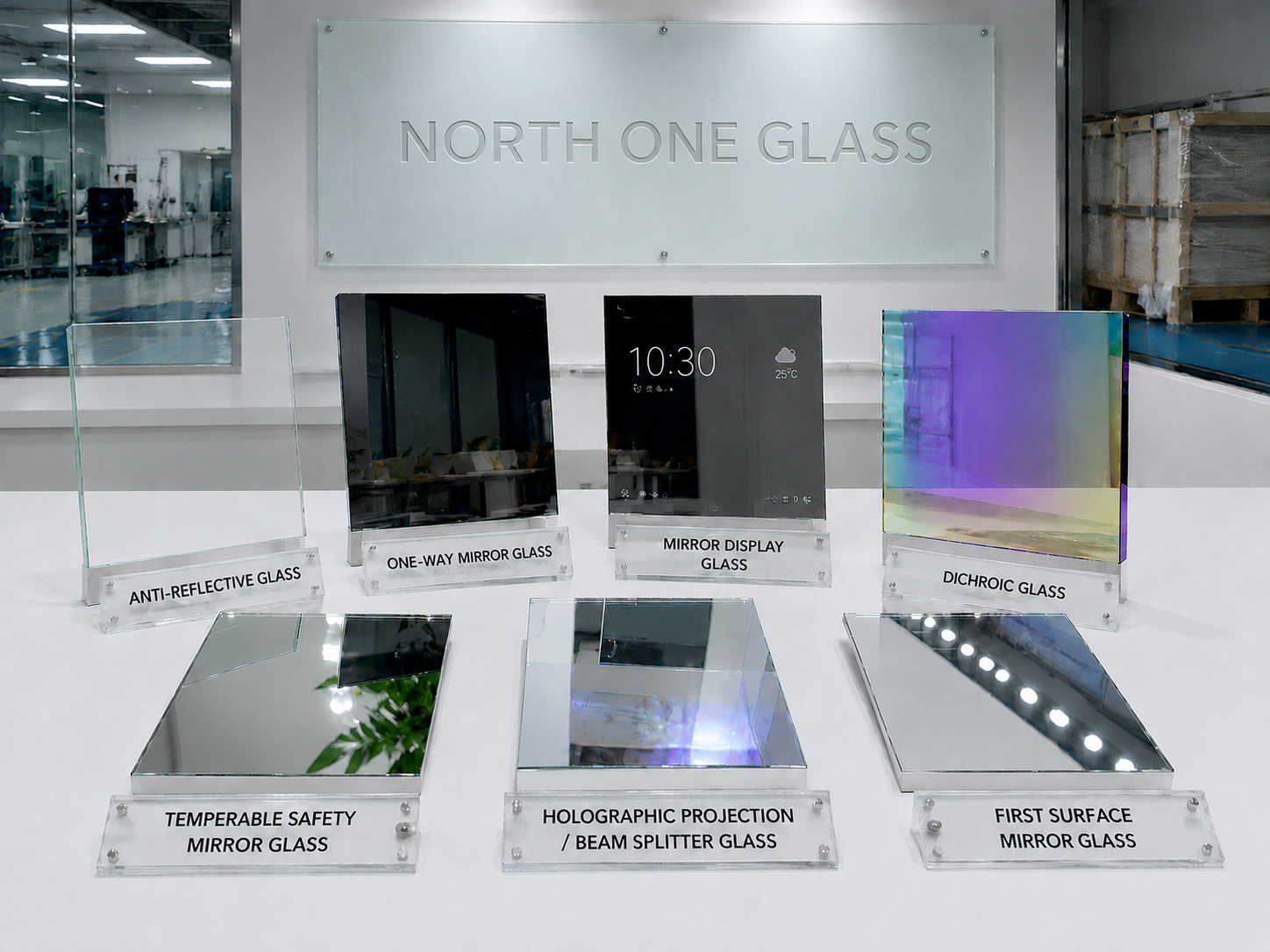
AR glass reduces reflection; it does not create the controlled reflection/transmission balance used by one-way mirror glass or mirror-display glass. In holographic displays and abyss mirrors, AR glass can be specified as the outer anti-ghosting cover to reduce secondary surface reflections, but the semi-reflective core still uses a different optical glass product.
Processing and Cleaning
The confirmed AR route supports custom cutting, edge grinding, drilling, 700°C physical tempering, chemical strengthening, PVB/SGP lamination and insulating-glass construction. Tempering color difference remains below ΔE 0.5 for the approved route, and the coating edge remains intact during the confirmed cutting and finishing process. The approved everyday cleaning statement allows standard commercial glass cleaner without coating damage under normal conditions. Remove grit first, use a clean soft cloth and avoid abrasive pads, metal scrapers or dry dust that can drag particles across the surface.
North One Glass Manufacturing Fit
North One Glass operates a 16-metre optical coating line, supplies thicknesses from 1.1mm to 15mm and can review jumbo sheets up to 3,300 x 16,000mm. More than ten regular sheet formats, including 2,140 x 3,300mm and 2,440 x 3,660mm, support nesting plans that can reduce raw-material waste by approximately 10%-20% for suitable size mixes. For sample matching, the PerkinElmer Lambda 950 measures transmission, reflection spectra and LAB color coordinates. After receiving a physical customer sample, the optical team can prepare a matched trial sample within 48 hours. Standard A4 AR samples are available free of charge; the buyer provides a DHL, FedEx or UPS account or pays the international courier cost. Read the AR product family and AR manufacturer route before preparing a project enquiry.
FAQ
Q1: Does AR glass use a frosted surface?
No. AR uses an optical coating and light-wave interference to reduce reflection. Frosted or textured diffusion is associated with AG-style glare control.
Q2: Is 99% transmission guaranteed for every AR grade?
No. The up-to-99% and below-0.5% figures belong to the dedicated high-performance AR source, while AR98 has a separate approved value context. Confirm the grade and test condition for the project.
Q3: What is the difference between AR98 and AR94?
AR98 is positioned for premium clarity. AR94 is positioned as a more cost-effective high-transmission route for large industrial-control and commercial-display applications.
Q4: What is UV75 used for?
UV75 is used when ultraviolet filtering is part of the conservation requirement, such as artwork, paper archives, historical documents, textiles and valuable exhibits.
Q5: Can the coating survive steel-wool testing?
The approved result is 5,000 reciprocating steel-wool rubbing cycles without coating peeling or visible damage under the specified test.