Buyer Knowledge Center

Glass Buyer Knowledge Hub

Practical comparisons and specification notes for coated glass sourcing.

Product families

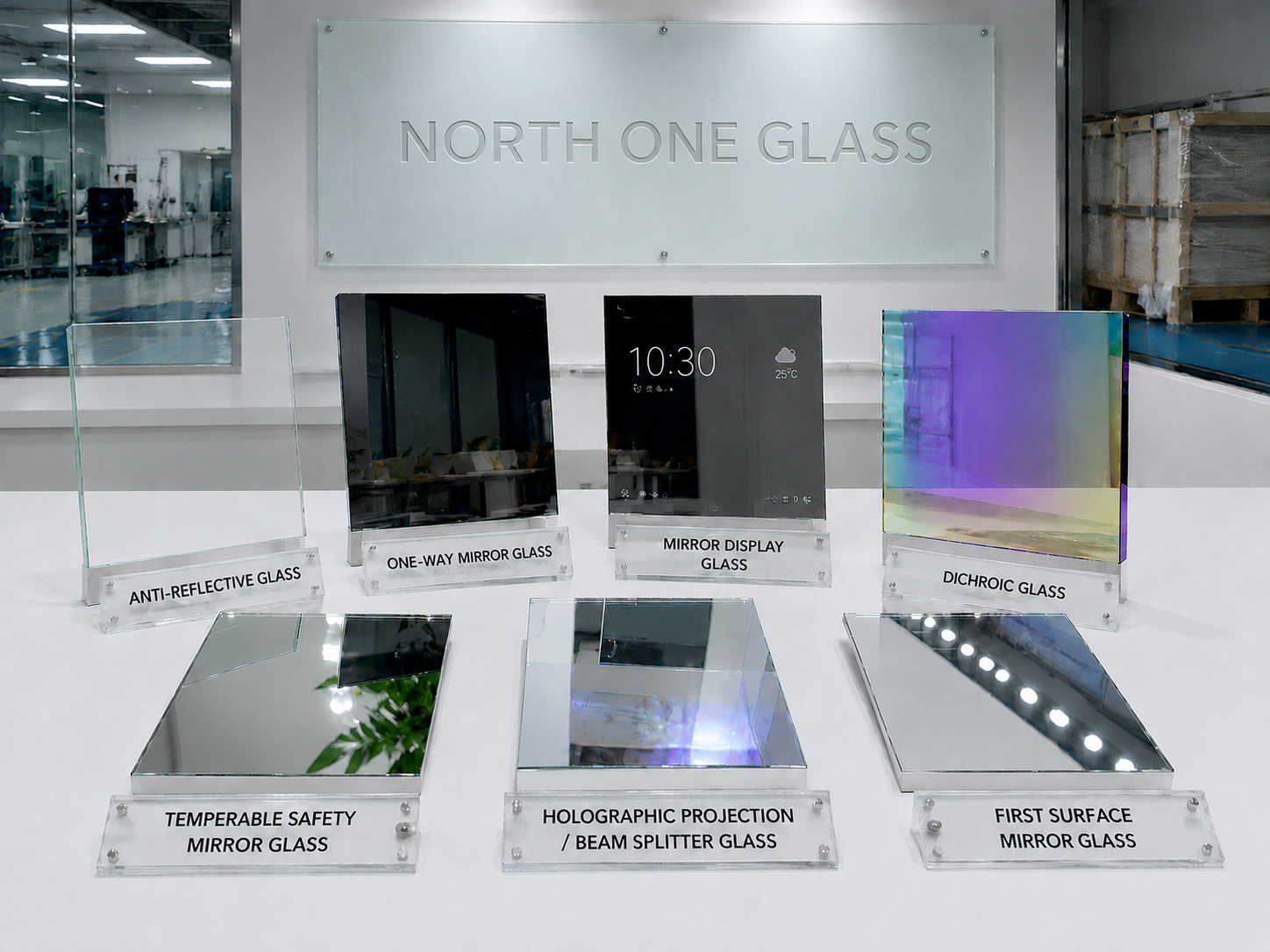
Open All Products product page Open Anti-Reflective Glass product page Open One-Way Mirror Glass product page Open Temperable Mirror product page Open Dichroic Glass product page Open Mirror Display Glass product page Open Holographic Projection Glass product page Open First Surface Mirror product page Open General Glass Knowledge product page
More filters

Showing 31-34 of 34 resources

Buyer guides

Latest buying guides

34 total resources
Featured guide Temperable Mirror Buying Guides

Temperable Mirror vs Silver Mirror vs Safety Film Mirror: Differences, Cost and Selection Guide

Temperable Mirror is selected when a project needs mirror appearance plus a physical tempering route, outdoor durability and resistance to black edge. Traditional silver or aluminum mirror is lower-cost for dry indoor decoration but cannot pass through high-temperature tempering after coating. Safety film mirror relies on an organic film to hold fragments and is not equivalent to tempered safety mirror glass.

Read Guide
View Product Related FAQ Send RFQ
Temperable Mirror Technical Knowledge

How Temperable Mirror Works: Manufacturing, Tempering and Quality Inspection

Temperable Mirror works by replacing conventional silver backing and paint with a vacuum-sputtered hard metal and metal-oxide coating on float glass. The coating bonds to the glass and tolerates cutting, edging, drilling and physical tempering above 600°C without peeling, blistering, discoloration or edge chipping. Quality checks include 5000-cycle steel-wool testing, ΔE color stability, SGS/CNAS reports and weathering review.

Read Guide
View Product Related FAQ Send RFQ
Temperable Mirror Buying Guides

Temperable Mirror Applications: Design Guide, Specifications and Project Cases

Temperable Mirror is used where mirror appearance must be combined with safety glass behavior, humidity resistance, outdoor weatherability or processed custom shapes. Typical applications include high-end bathrooms, shower mirrors, kitchen splashbacks, elevator cabins, public wall cladding, gym and dance-room mirror walls, outdoor landscape mirrors, scenic-area facades, furniture panels and integrated LED mirror modules.

Read Guide
View Product Related FAQ Send RFQ
Temperable Mirror Buying Guides

Temperable Mirror FAQ: Selection, Installation, Cleaning and Troubleshooting

This Temperable Mirror FAQ answers buyer questions about what temperable mirror is, how it differs from silver mirror and safety film mirror, what thicknesses and optical values are available, whether it can be cut and drilled before tempering, how prices are calculated, which samples and reports are available, how long production takes and how export breakage is handled.

Read Guide
View Product Related FAQ Send RFQ