


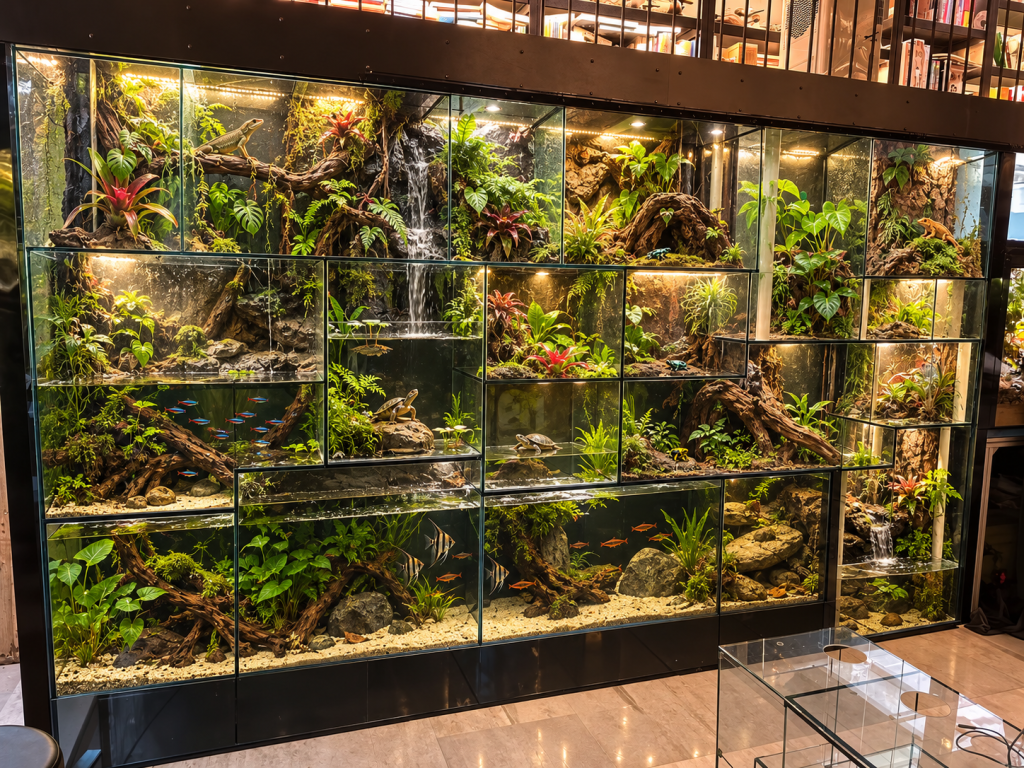
5 mm double-sided AR98 glass. More than 50 different panel sizes. 4 mm-deep laser-cut notches. Real hardware-fit verification.
In April 2026, North One Glass worked with a specialist ecosystem-design team to fabricate high-transparency glass panels for a premium paludarium—a display enclosure combining aquatic and terrestrial environments.
The project demanded more than reduced reflections. Each enclosure system used over 50 different glass sizes, and nearly every panel required custom holes or notches for hinges, doors and other fittings. After evaluating the glass’s optical appearance, the customer approved prototype fabrication. When the first assembly revealed a mismatch between the actual metal hinges and the drawing-based glass cutouts, North One Glass brought the hardware into the factory, measured it directly and refined the machining design.
The revised panels were accepted and the project proceeded to repeat orders.
Project at a Glance
| Project detail | Specification |
|---|---|
| Customer | Specialist paludarium design team (anonymous) |
| Project date | April 2026 |
| Application | Aquatic-terrestrial ecosystem display / paludarium enclosure |
| Glass | 5 mm double-sided AR98 anti-reflective glass |
| Optical requirement | Visible light transmission above 98%, with reduced surface reflections |
| Complexity | 50+ unique panel sizes in an enclosure system |
| Precision features | 4 mm-deep laser-cut notches and 20 mm-diameter handle holes |
| Initial response | Initial solution agreed within 24 hours; evaluation samples received within 48 hours |
| Key engineering step | Actual hinge components measured and checked against the fabricated panels |
| Outcome | Optimized prototypes accepted; continuing customer orders |
The Challenge: A Clear View into Two Different Ecosystems
A paludarium combines water and land habitats. Plants, animals, terrain, water features and lighting all contribute to the display, so unwanted reflections from the enclosure can interfere with the intended viewing experience.
The customer wanted the glass to be as visually unobtrusive as practical. A visible light transmission target above 98%, together with low reflectance, made double-sided anti-reflective glass a natural starting point.
The environment also introduced practical concerns. The enclosure would be exposed to water, humidity, vapor and UV sterilization equipment, while cleaning could include algae removal and mechanical tools. The customer therefore asked about coating durability and maintenance—not simply how transparent a new sample looked.
The greatest manufacturing challenge, however, came from the enclosure design: more than 50 different panel dimensions, with many individual pieces requiring accurately positioned cutouts for metal hardware.
Fast Optical Evaluation: 5 mm Double-Sided AR98
North One Glass recommended 5 mm double-sided AR98 anti-reflective glass to reduce reflections from both glass surfaces and improve the view into the enclosure.
The team agreed the initial approach within 24 hours, and the customer received evaluation samples within 48 hours. The customer was pleased with the glass’s visual clarity and anti-reflective appearance.
Project-specific optical measurement data can be requested for the selected glass construction.
Discussing Coating Durability for Humid Displays
The customer asked whether the optical coating could tolerate the cleaning and exposure conditions expected in a paludarium.
North One Glass supplied reference abrasion, acid-resistance and alkali-resistance documentation for anti-reflective coatings to support the discussion. This helped the customer assess the proposal and proceed to custom prototype work.
The reference tests were performed on a different anti-reflective glass coating sample, not on the finished 5 mm AR98 paludarium panels. Accordingly, the case does not claim those values as product-specific performance results, nor does it imply proven immunity to UV exposure or scraping by metal tools. Any specified cleaning method should be checked against the final coating’s approved maintenance guidance.
Fifty-Plus Sizes: Why Laser-Processed Notches Mattered
After the optical glass selection, the team manufactured a first full-size prototype set.
Nearly every piece required custom machining. The detailed design included 4 mm-deep notches for hinges and related fittings, as well as 20 mm-diameter holes for selected door handles.
The small notch features were not practical with the conventional cutting and edging approach considered for the project. North One Glass used laser processing to produce these precision details alongside the other cutting and hole-making operations.
The job required more than reproducing a drawing. Dozens of unique panels had to work together in one finished enclosure.
The Assembly Problem: Drawings Versus Actual Metal Hinges
When the customer assembled the first prototype set, some of the glass notches and holes did not align with the metal hinge hardware as expected.
North One Glass immediately asked the customer to send the physical hinge components to the factory. Engineers measured the actual parts, placed them against the relevant glass pieces and checked the fit directly.
This led to a revised machining plan:
- Measure the received metal fittings.
- Compare the real hardware against the fabricated glass.
- Recheck the 4 mm notch depth, hole locations and installation geometry.
- Adjust the glass processing drawings to the actual hardware dimensions.
- Reprocess the affected components for the revised assembly.
The corrected prototype gave the customer a workable hardware-to-glass fit, turning an early assembly issue into a more repeatable production method.
Customer Outcome: An Approved Prototype and Repeat Supply
The customer evaluated the revised glass components after assembly and was satisfied with the viewing quality, machining and hinge compatibility.
The project progressed into repeat orders and continuing cooperation. It demonstrated that North One Glass could manage high-performance optical glass and demanding non-standard fabrication within the same customer project.
The process followed a clear sequence:
Optical brief → AR98 sample evaluation → Complex laser fabrication → Initial assembly → Physical hinge measurement → Revised panels → Repeat orders
Engineering Lessons from the Project
Optical Performance Has to Be Matched to the Actual Display
High visible transmission and low reflectance can make the contents of a paludarium easier to view. The best choice still depends on lighting and surface exposure.
Precision Glass Processing Includes Mechanical Fit
For an assembly containing dozens of differently shaped parts, accurate drawings matter—but real hardware-fit checks can reveal and solve problems drawings alone miss.
Laser Cutting Enables Difficult Small Features
The 4 mm-deep notches are a concrete example of how a specialized processing method can support custom glass designs where conventional tooling is unsuitable.
Durability Documentation Must Match the Product and Use Conditions
Reference coating tests can inform a development discussion. Product-specific qualification should separately account for water exposure, UV equipment and actual cleaning tools.
Frequently Asked Questions
What is AR98 glass used for in a paludarium?
Double-sided AR98 glass reduces surface reflections and improves the view of plants, animals and landscape features inside aquatic-terrestrial display enclosures.
Can 5 mm AR glass be customized for complex enclosure designs?
Yes. This project used more than 50 different glass dimensions with custom notches and mounting holes, including features prepared by laser processing.
How deep were the laser-cut notches?
The specified special notches were 4 mm deep. Their shape and location were matched to the actual enclosure hardware.
How were glass and metal hinge-fit problems resolved?
The customer sent physical hinge samples to North One Glass. The team measured them, checked them against glass prototypes and revised the processing drawings and affected components.
Does a reference abrasion test guarantee resistance to algae scrapers?
No. Abrasion methods differ, and results from another coating sample cannot prove resistance of the final AR98 panels to a particular blade or cleaning tool. Product-specific approval and care guidance are required.
Discuss Custom AR Glass Processing
For paludariums, aquascaping systems, terrariums and specialty display enclosures, North One Glass can review optical targets, glass thickness, drawings, hole locations, notch geometry and actual installation hardware.
Related product: Anti-Reflective Glass
North One Glass — Transmit. Reflect. Protect.