


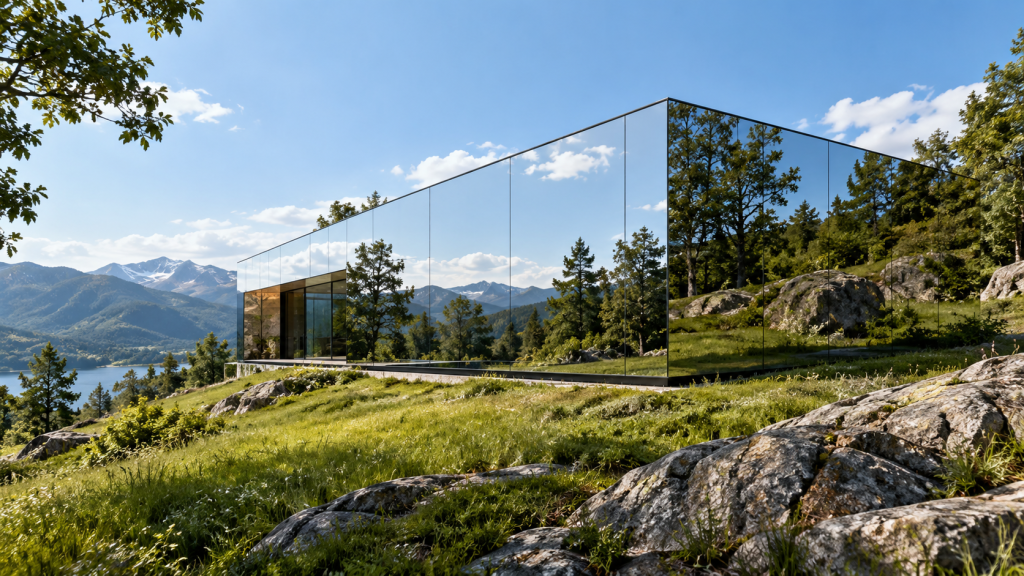
Project snapshot: North One Glass delivered completed 3,300 mm-wide, 46 mm-thick laminated protective glazing for a private mirror house project in the United States. The construction incorporated an 8 mm custom one-way mirror glass component with a project-specific reflective coating designed to enhance reflection in selected infrared wavelengths. The client approved initial and larger-format samples before placing bulk and repeat orders.
Project location: United States (specific location confidential)
Application: Private mirror house / invisible house
Initial inquiry: Late 2025
Customer: U.S. architectural design team (identity confidential)
Status: Completed product delivery; bulk and repeat orders
Project supplier: North One Glass
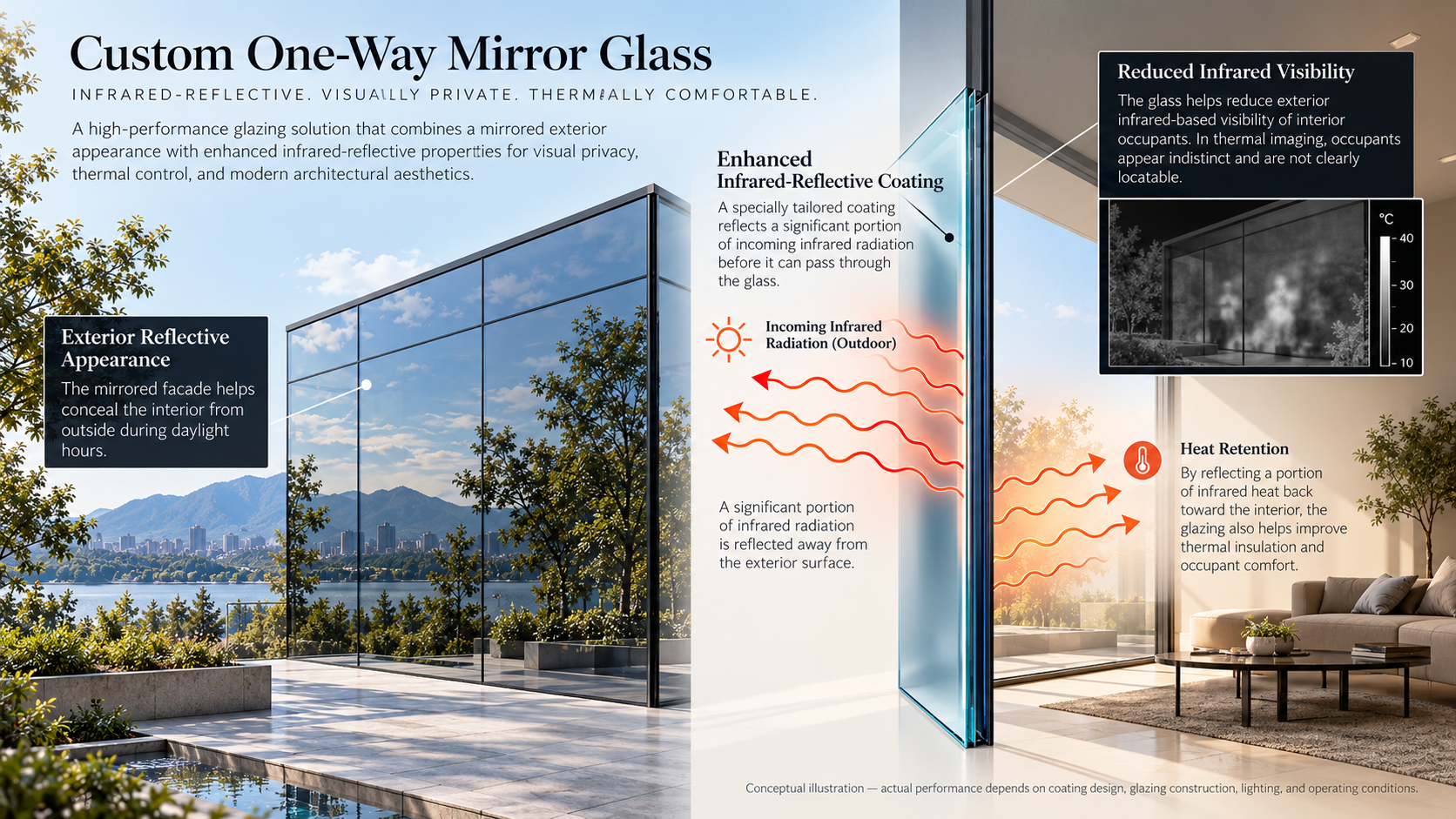
At a Glance: Actual Delivered Specifications
| Project item | Actual project information |
|---|---|
| Glass application | Mirror house / invisible house exterior glazing |
| Optical glass component | Custom one-way mirror glass (two-way mirror glass) |
| Optical coating | Project-specific reflective coating with enhanced infrared reflection in selected bands |
| Optical glass thickness | 8 mm |
| Finished glazing | Completed multi-layer bullet-resistant laminated glass construction |
| Final overall thickness | 46 mm |
| Actual finished glass width | 3,300 mm |
| Optical spectral values | Confidential at the client’s request |
| Final ballistic rating | Not publicly disclosed; no specific certification level is claimed here |
| Qualification sequence | Initial sample → larger-format sample → bulk order → repeat orders |
Important distinction: The 3,300 mm measurement is the width of the finished composite glazing actually delivered, not just a nominal coating-line capacity or a possible raw-sheet width.
Project Background: A Reflective House That Preserves Outward Views
A mirror house, sometimes called an invisible house, uses reflective glass surfaces to visually blend a building with its natural surroundings. Trees, sky, hills and other landscape features appear across the facade, reducing the visual contrast between the building and the environment.
But a functional mirror house must do more than reflect its surroundings. Its occupants may also need useful views outside, daylight and privacy appropriate to the way the building is used.
In late 2025, an American architectural design team approached North One Glass about a private retreat featuring a highly reflective exterior and enhanced protective-glazing requirements. The proposal combined three needs that are not usually solved by a standard mirror panel:
- A mirror-like exterior with outward visibility from the interior under suitable lighting conditions.
- A specially tailored reflective coating, including selected infrared-reflection requirements.
- A 3,300 mm-wide finished glass panel incorporated into a multi-layer protective glazing assembly.
The customer needed a complete material and processing solution rather than a catalog-size reflective sheet.
Challenge 1: Exterior Mirror Appearance and Interior Visibility
A conventional silver-backed mirror is strongly reflective but does not provide a view through the glass. Clear architectural glazing transmits light but typically cannot deliver the same mirrored facade appearance.
One-way mirror glass—also called two-way mirror glass or semi-reflective glass—reflects some incoming light and transmits some of it. When daylight makes the exterior considerably brighter than the interior, the outdoor surface can appear mirror-like while occupants can still see outward.
This effect is lighting-dependent, not permanently one-directional. At night, or when interior lighting becomes brighter than the outside, privacy may weaken or reverse. Glazing selection must therefore account for the actual architectural lighting conditions.
For a more detailed explanation, read our guide to how one-way mirror glass works and our one-way mirror glass lighting guide.
Challenge 2: A Confidential, Custom Optical Coating
The client required optical performance beyond North One Glass’s standard one-way mirror glass configurations. The requested coating included enhanced reflection at selected infrared wavelengths, in addition to the visual appearance required for the building.
North One Glass translated the project requirements into a custom coated-glass specification, defined the optical targets and evaluated development samples.
The exact visible-light transmission, reflectance, infrared spectral data, coating-stack design and acceptance criteria are confidential. This case study does not claim a specific infrared rejection percentage, thermal-imaging performance or resistance to detection. Those claims would require separate, defined testing and customer authorization to disclose.
Challenge 3: Delivering a 3,300 mm-Wide Finished Protective Glass Assembly
The client specified a finished width of 3,300 mm to support the intended large-format architectural appearance.
The dimension introduced challenges beyond coating the original glass. The reflective component also had to proceed through specialist composite processing to become part of a considerably thicker protective glazing product.
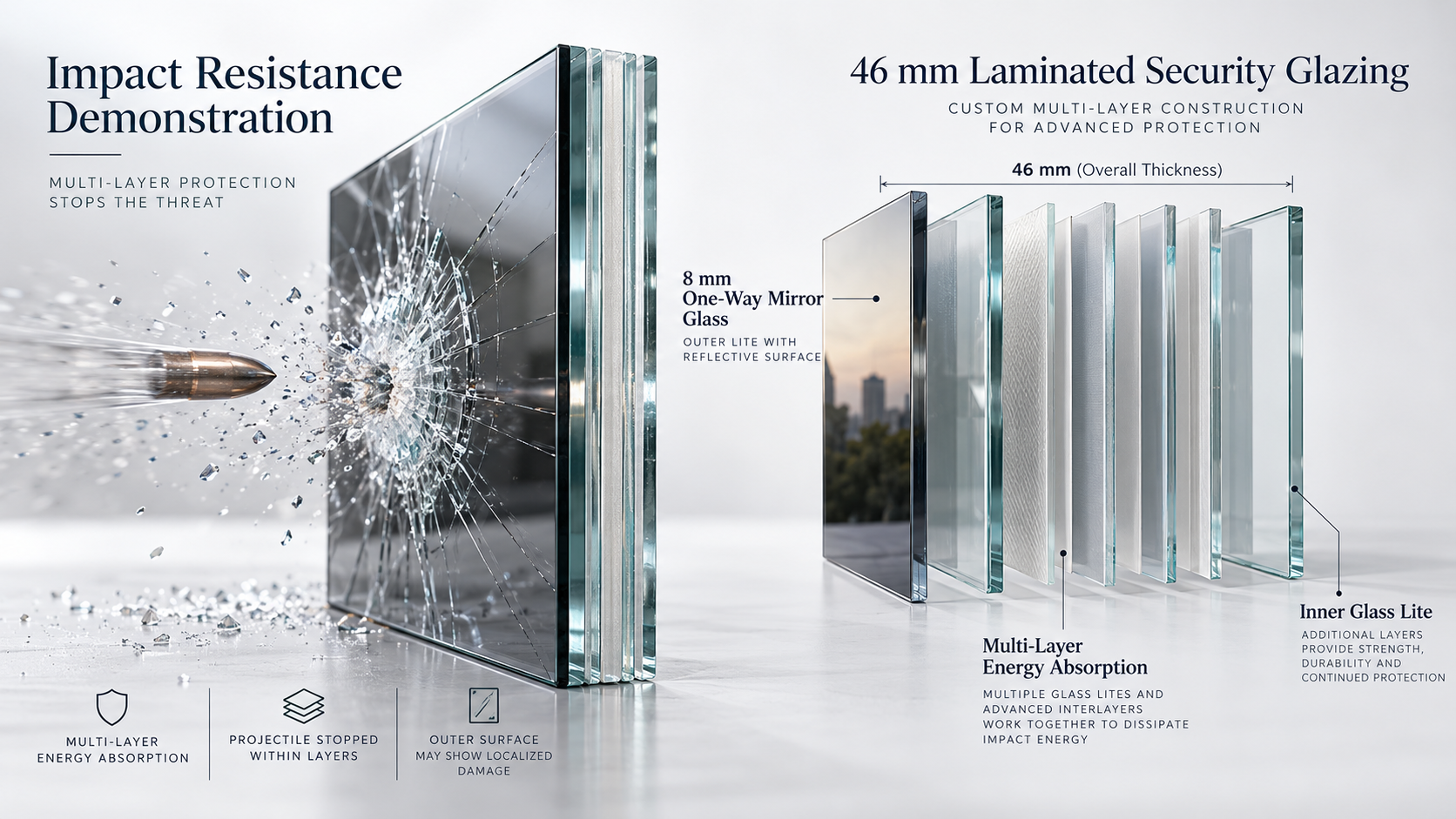
North One Glass supplied the custom 8 mm one-way mirror glass for further processing by a specialist manufacturer experienced in bullet-resistant laminated glazing. The completed product was a 46 mm multi-layer laminated glazing assembly, with an actual delivered width of 3,300 mm.
Bullet resistance is a property of a tested glazing construction, not of the reflective 8 mm component in isolation. This case records the completed protective-glazing product supplied, but does not assert a particular UL 752 or EN 1063 performance classification without a corresponding disclosed test record.
North One Glass’s Solution: Combine Custom Optical Glass with Specialist Composite Processing
Instead of treating reflectivity and protective performance as the same problem, the project team approached them as two related requirements:
- Optical function: A custom one-way mirror glass component supplied the desired external reflection, appropriate outward viewing and the specified infrared-reflection design characteristics.
- Protective glazing function: A specialist multi-layer glass construction provided the project’s protective glazing configuration.
- Dimensional function: Coating, fabrication, composite processing and handling were planned around the customer’s 3,300 mm finished-width requirement.
North One Glass supplied the functional glass and delivered the completed glazing. A specialist protective-glazing manufacturer performed the composite processing. This division of work allowed the customer to receive completed laminated glass, rather than being left to arrange the integration of a coated sheet independently.
Actual Material and Processing Route
| Stage | What happened |
|---|---|
| Requirement review | Architectural, optical, dimensional and protective-glazing needs were reviewed |
| Coating specification | A project-specific one-way mirror coating was selected and developed with specialist coating resources |
| Functional-glass supply | 8 mm custom reflective glass was produced for the project |
| Composite processing | The optical glass was sent to a specialist bullet-resistant glazing facility for multi-layer lamination |
| Final delivered product | 46 mm finished laminated protective glazing, 3,300 mm wide |
| Commercial continuation | The client moved from samples to bulk and repeat purchases |
From First Sample to Bulk and Repeat Orders
Step 1: Technical Consultation and Initial Sample
The North One Glass team reviewed the client’s design objectives and proposed a custom one-way mirror glass and laminated-glazing route. Following the proposal, we arranged a small initial sample for optical and appearance evaluation.
The client responded positively and requested a larger sample.
Step 2: Larger-Format Sample Evaluation
The subsequent larger-format sample allowed the design team to evaluate the visual result on a more representative scale. After this second evaluation, the client approved progression toward bulk supply.
This staged qualification helped connect the visual concept with a practical manufacturing and delivery process.
Step 3: Completed Composite Glazing and Repeat Supply
The custom reflective glass was supplied for specialist protective-glazing processing, and the finished composite product was delivered at the required 3,300 mm width and 46 mm total thickness.
The client placed a bulk order and continued ordering after the sample stages. The outcome was a commercially supplied, completed glazing product—not merely a concept drawing or unprocessed sample.
What This Real Project Demonstrates
The principal value of this project was meeting multiple optical, dimensional and protective-glazing requirements in one delivered product.
1. A verified jumbo-width delivery: North One Glass delivered finished 3,300 mm-wide composite glazing for the project. This is an actual project result rather than a theoretical size claim.
2. A custom coating route: The client needed a project-specific optical configuration, including enhanced reflection in selected infrared wavelengths, instead of a standard visible-light reflection/transmission grade.
3. Finished-product delivery: The scope extended from custom optical glass to completed 46 mm laminated protective glazing through specialist composite manufacturing.
4. Sample-based commercial qualification: Initial sampling and larger-format evaluation were followed by bulk supply and repeat orders.
The case illustrates North One Glass’s ability to translate unusual architectural requests into a defined material specification, specialist processing and a final delivered product.
Practical Considerations for Architects and Glazing Buyers
When specifying one-way mirror glass for a mirror house, reflective facade or other large architectural glazing project, provide:
- Visual target: Desired exterior mirror appearance and acceptable outward-view brightness.
- Lighting conditions: Typical daytime and nighttime illumination on both sides of the glass.
- Optical requirements: Visible transmission, reflectance, appearance and any application-specific spectral targets.
- Finished dimensions: Actual panel width, length, thickness, edge conditions and tolerances.
- Glazing construction: Whether the final product must be monolithic, tempered, laminated, insulated or part of a specialist protective system.
- Verification requirements: Required optical reports, processing checks and any independently tested protective performance level.
- Logistics: Destination, quantity, handling conditions, packing and delivery schedule.
For other use cases and construction options, see one-way mirror glass applications, including invisible houses and our one-way mirror glass product information.
Frequently Asked Questions
What glass is used for an invisible house or mirror house?
Mirror houses can use semi-reflective or one-way mirror glass designed to reflect the landscape while allowing some outward visibility. The correct glazing construction depends on lighting, appearance, panel size and safety requirements.
Can one-way mirror glass be laminated into bullet-resistant glass?
Yes, subject to material compatibility and the design of the complete protective system. In this case, an 8 mm custom one-way mirror glass component was incorporated into a 46 mm multi-layer laminated protective glazing product. Any specified ballistic rating must be verified for the finished construction.
Has North One Glass actually delivered 3,300 mm-wide one-way mirror glazing?
Yes. In this U.S. mirror house project, the actual finished laminated glazing delivered was 3,300 mm wide. The finished assembly was 46 mm thick.
Can a one-way mirror coating be customized for infrared reflectance?
Yes. Selected spectral-reflection requirements can be reviewed through a custom coating-development route. This project included enhanced infrared-reflection requirements, but its spectral data and coating design are confidential.
Can you see outside through a mirror house during the day?
Yes, if a suitable semi-reflective glass and lighting arrangement are used. Outward viewing and exterior privacy depend on the optical properties of the glass and the relative brightness on each side.
Does mirror house glass provide guaranteed privacy at night?
No. If the interior becomes brighter than the exterior, the apparent one-way effect can weaken or reverse. Nighttime privacy requires additional planning for lighting and, where needed, other privacy measures.
Does 46 mm thickness establish a bullet-resistance certification?
No. Thickness alone does not establish a specific ballistic-resistance rating. Any performance classification must correspond to relevant testing of the finished glazing construction.
Can North One Glass supply finished laminated glazing rather than coated sheets only?
Yes. North One Glass supplies custom optical glass and finished glazing to the agreed specification. Specialist protective constructions receive a separate fabrication review. In this project, the customer received a completed 46 mm laminated glazing product, not only the 8 mm coated component.
Request a Custom One-Way Mirror Glass Solution
North One Glass helps international architects, glass processors, facade contractors and project buyers evaluate custom optical glass, large-format dimensions and finished-glazing processing routes.
For a project review, share your application, drawings, finished glass size, expected optical appearance, required construction, quantity and delivery destination.
Explore our one-way mirror glass products or email [email protected] to discuss your requirements.
North One Glass — Transmit. Reflect. Protect.
Confidentiality note: The customer’s identity, exact project location and proprietary optical data are withheld. No specific ballistic certification or infrared-detection performance is claimed in this article.