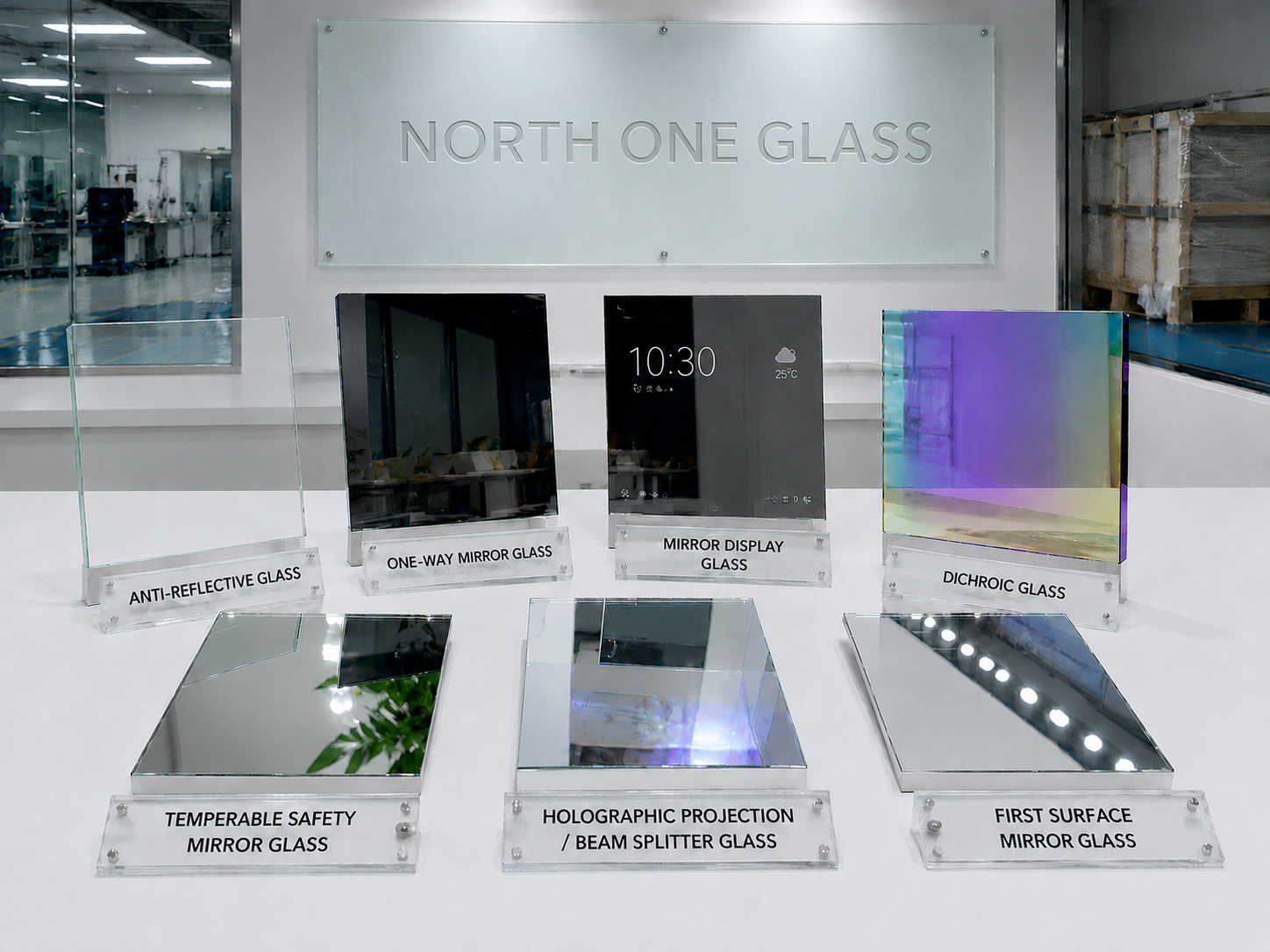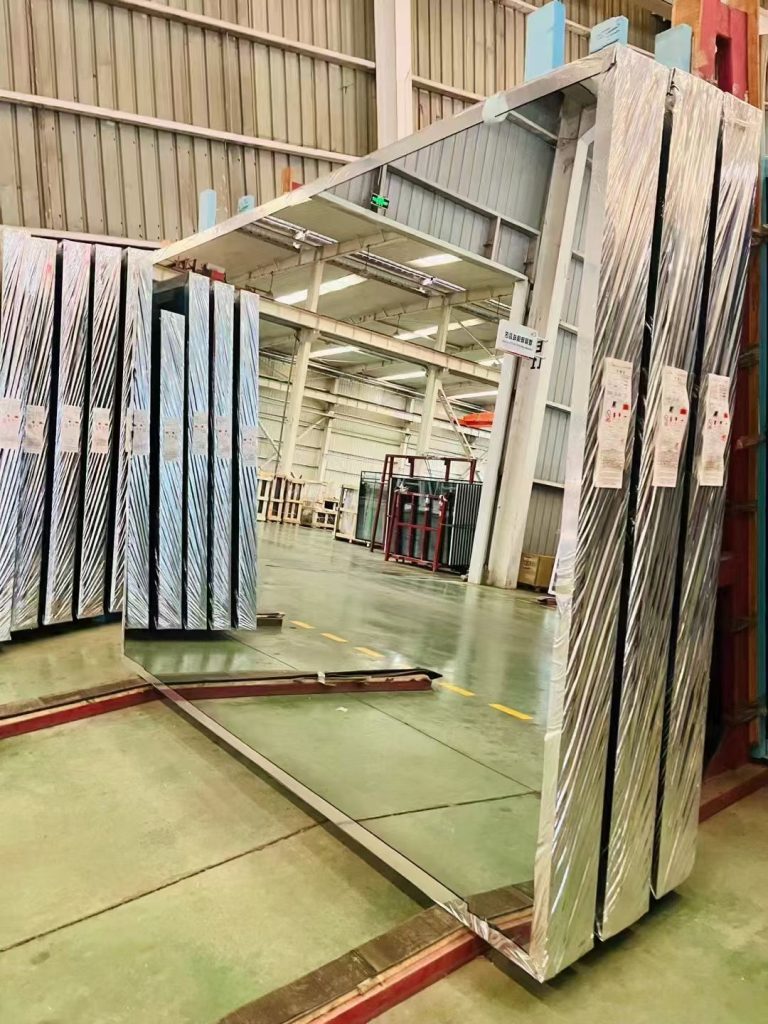
“Temperable mirror” describes material designed to withstand a specified downstream tempering route. “Tempered mirror” describes a finished mirror panel that has already completed heat treatment. One term is about processing compatibility; the other is about the current state of the supplied product.
TL;DR
- Order temperable mirror when an approved fabricator will cut, edge, drill, wash, and temper the coated stock.
- Order tempered mirror when the supplier is responsible for delivering the panel after heat treatment.
- Confirm the exact process route before cutting. Coating side, furnace settings, washing, handling, inspection, and post-tempering fabrication limits matter.
Why the distinction matters
Tempering changes the glass through controlled heating and cooling. Most cutting, drilling, notching, and edge shaping must be completed before that process. A coating that is suitable for an approved tempering cycle still needs correct orientation and handling. It should not be assumed compatible with every furnace recipe, substrate, thickness, ceramic ink, laminating route, or local standard. An already tempered mirror arrives with its safety-glass processing completed. Its final dimensions and holes should therefore match the approved drawing. Post-tempering cutting or drilling is generally not the normal route and can cause failure.
Define who owns each step
A useful production brief identifies:
The Temperable Safety Mirror category describes the product family. The T0-5/R70-75 project product provides the approved reference values that should be reviewed for the actual order. Other coated options are listed in the products hub.
- who supplies the coated stock;
- who cuts, edges, drills, washes, and tempers it;
- substrate, nominal thickness, dimensions, tolerances, and edge quality;
- coating orientation through the furnace and in the final installation;
- required safety standard and test documentation;
- visual, optical, dimensional, fragmentation, and coating acceptance checks;
- packing and surface-protection method after processing.
Sample approval before volume production
When a new furnace, thickness, substrate, or processing combination is involved, use a representative trial rather than assuming the result from an unrelated job. Agree on the inspection method and acceptance boundary before production. This prevents the word “temperable” from becoming an unsupported promise about every possible process.
FAQ
Does temperable mirror arrive already tempered?
Not necessarily. The term usually means the coated material is intended for an approved downstream tempering route. The order must state whether delivery is before or after tempering.
Can holes be drilled after the mirror is tempered?
The normal production route is to complete holes, notches, edgework, and shaping before tempering. Final drawings should be approved before heat treatment.
What should a fabricator provide for technical review?
Send the glass build-up, drawing, substrate and thickness, furnace type and intended cycle, coating orientation, processing sequence, required standard, quantity, and destination through the contact page.