Temperable Mirror Applications: Design Guide, Specifications and Project Cases
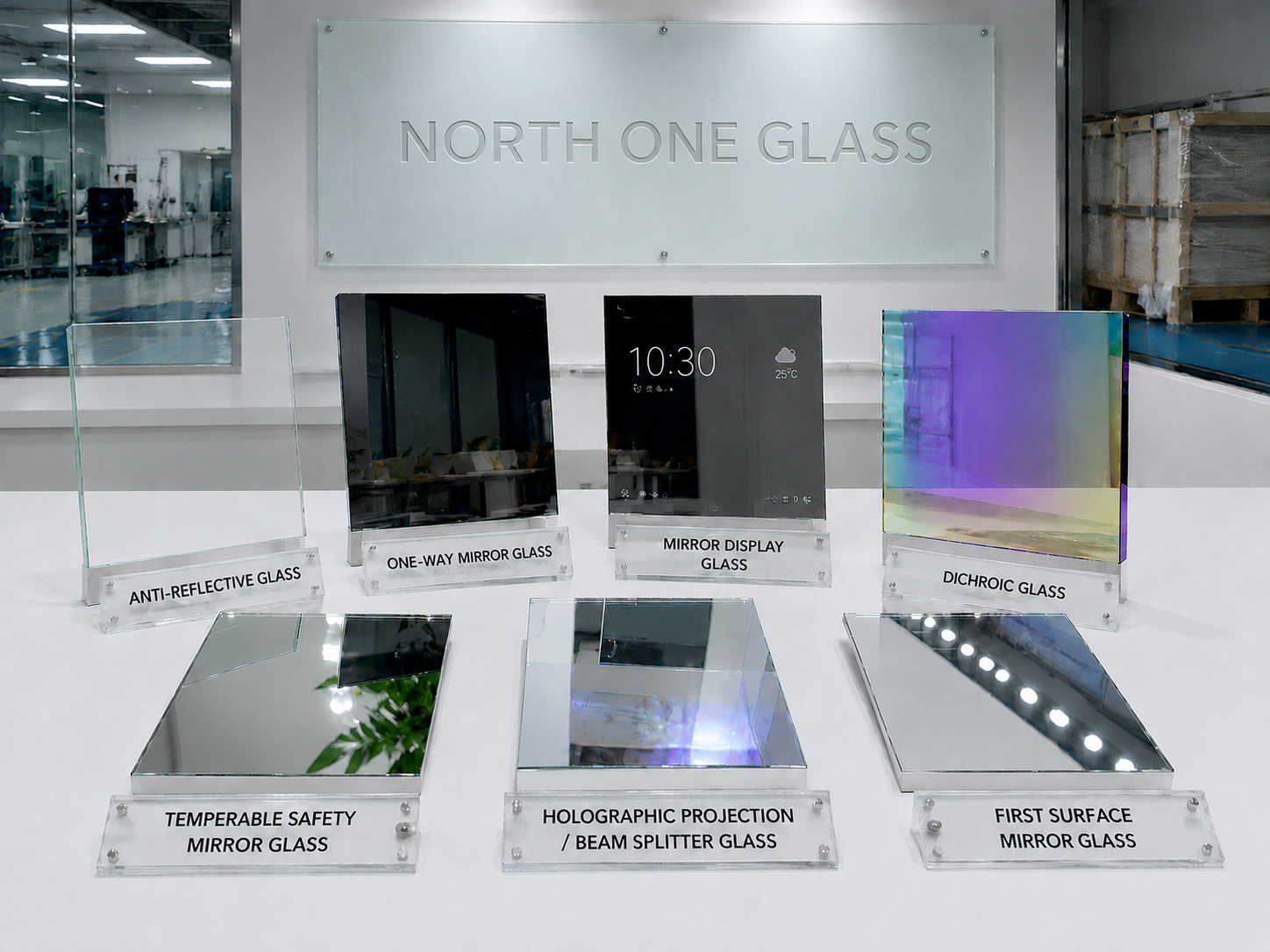
Temperable Mirror is used when a project needs mirror appearance plus physical safety glass behavior, humidity resistance, outdoor durability or custom processing. Unlike traditional mirror routes, North One Glass Temperable Mirror can be cut, edged, drilled and CNC processed before physical tempering. After tempering, it has higher strength and safer blunt-particle breakage, making it suitable for bathrooms, kitchens, elevators, gyms, public spaces, facades and scenic outdoor projects.
Application Design Table
| Application | Problem to Solve | Specification Starting Point | Common Mistake |
|---|---|---|---|
| Hotel bathrooms and washrooms | Humidity, black edge and breakage risk | Tempered finished mirror, moisture-resistant edge design and suitable thickness | Using common silver mirror in long-term wet areas. |
| Shower and wet-room mirrors | Steam, water splash and safety requirement | Tempered mirror route with 20-year outdoor no-black-edge positioning | Ignoring exposed edges and cleaning chemicals. |
| Kitchen splashbacks | Heat, oil, impact and cleaning | Physically tempered finished mirror with holes or cutouts processed before tempering | Using film or back-painted mirror behind a heat source. |
| Elevators and public wall cladding | Public impact risk and safety compliance | Tempered finished panels, polished edges and secure installation | Choosing ordinary mirror only by initial price. |
| Gym and dance-room mirror walls | Large-area impact and injury risk | Tempered mirror panels with suitable thickness and installation support | Using brittle non-tempered mirror walls in high-traffic rooms. |
| Outdoor landscape and scenic areas | Rain, UV, sand, salt, temperature change and black edge | Outdoor temperable mirror with corrosion-resistant coating and export packing | Assuming indoor silver mirror will survive outdoors. |
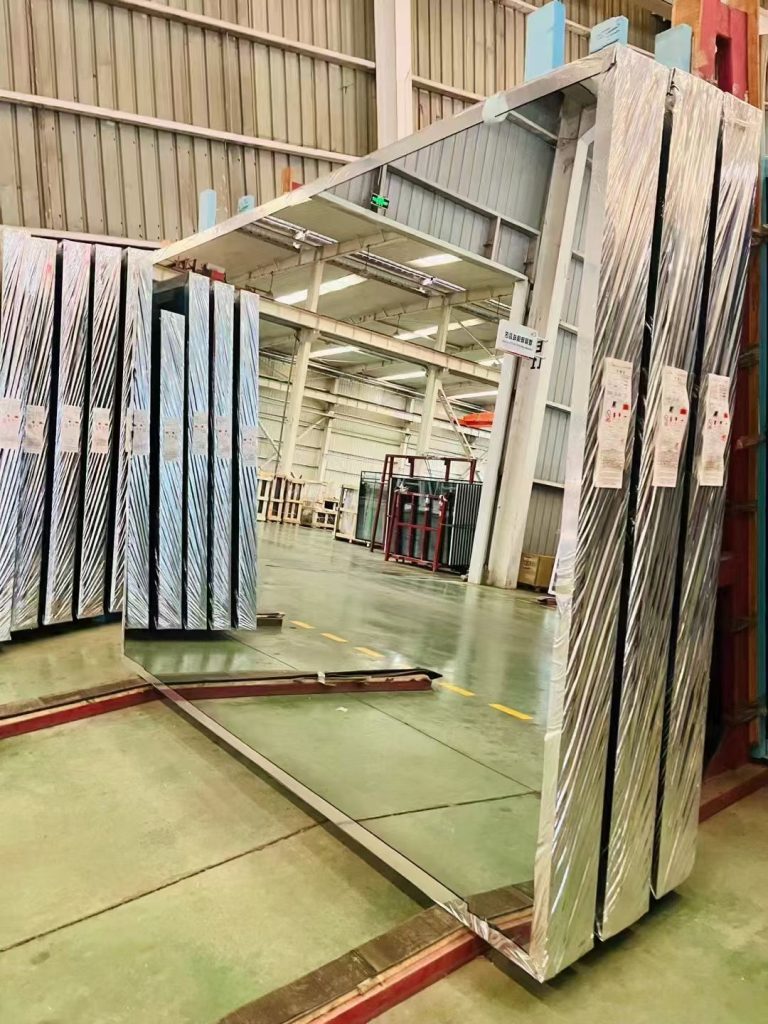
| Mirror facades and architecture | Large panels, visual continuity and weathering | Jumbo review up to 3300 x 16000 mm and cutting-layout planning | Failing to test color uniformity and installation conditions. |
| Furniture, LED mirror and framed modules | Custom shape, holes, frame and lighting integration | CNC processing, laser de-coating, LED strip, driver and frame assembly | Separating glass and module design too late in procurement. |
Bathrooms and Wet Areas
Bathrooms and showers are common failure points for traditional mirrors. Moisture can attack backing paint and silver layers, causing black edge and peeling. Temperable Mirror uses a paint-free hard coating route and can be supplied as a tempered finished mirror for safer use. Buyers should specify edge exposure, mounting, cleaning chemicals, thickness and whether the mirror needs holes, cutouts or integrated lighting.
Public Buildings, Elevators and Gyms
Public interiors need safety behavior as much as appearance. In elevators, corridors, fitness rooms and dance studios, a mirror panel may face impact risk. Physical tempering increases strength by about 3-5 times and helps broken glass form small blunt particles. Use finished-size drawings and installation details to review the correct thickness and edgework.
Outdoor Landscapes and Mirror Architecture
Outdoor mirror projects face rain, strong UV, acid/alkali exposure, coastal salt spray, sand, dust and temperature change. North One Glass Temperable Mirror is positioned for 20-year outdoor resistance against black edge, oxidation, peeling and color degradation. For large scenic-area or facade work, review jumbo size, transport route, crate design, installation, drainage and maintenance access.
Project References from Supplied Material
The supplied source text lists global and domestic project references including a Dubai desert hotel outdoor landscape, a Sydney coastal outdoor installation, Paris Champs-Élysées commercial mirror decoration and the Wansui Mountain scenic-area mirror wall. The project reference file also lists Wansui Mountain, a Lanzhou scenic-area Sky Mirror platform, Kyushu library in Japan, Hulunbuir grassland reflective architecture and an Australian desert-city scenic project. Do not add unconfirmed customer brands or private project names beyond the supplied public references.
Integrated Module Applications
For bathroom cabinets, furniture, hospitality interiors and retail mirrors, North One Glass can review aluminum or stainless-steel frames, high-brightness LED strips and power-driver integration. Buyers should provide wiring position, de-coated light channels, frame drawing, installation method and packaging requirement early, because module design changes glass processing.
North One Glass Fit
North One Glass supplies Temperable Mirror for safety, outdoor and processed mirror applications. The T0-5/R70-75 Temperable Safety Mirror product is the main product route for architectural projects. Send application drawings through the contact page.
FAQ
Q: Which application benefits most from temperable mirror?
A: Projects with moisture, impact risk, outdoor exposure or custom processing benefit most.
Q: Is it suitable for bathrooms?
A: Yes. It is designed to reduce black-edge and oxidation problems in humid mirror applications.
Q: Can it be used behind kitchen stoves?
A: It can be reviewed as a tempered kitchen splashback route, with heat, cutouts, mounting and cleaning conditions confirmed.
Q: Is it suitable for gyms?
A: Yes. Tempered finished mirror panels are a stronger route for large public mirror walls.
Q: Can it be used outdoors?
A: Yes. The supplied data supports outdoor, coastal, wet and scenic-area use with 20-year no-black-edge and oxidation warranty positioning.
Q: Are the listed projects named customer contracts?
A: They should be treated as supplied public project references; do not add unconfirmed customer brands or private project details.
Q: What should designers confirm before ordering?
A: Confirm thickness, size, safety route, holes, edges, installation, cleaning, outdoor exposure, sample approval and packing.