First Surface Mirror Price, Specifications and Buying Guide
A First Surface Mirror, also called a Front Surface Mirror, places the reflective optical coating on the front face of the glass. For procurement, this means the buyer should not quote it like an ordinary decorative mirror. North One Glass supplies 95% visible-reflection first surface mirrors in 1.1-15 mm thicknesses, with standard sheets and custom cutting. Request a quotation based on thickness, size, quantity and processing route.
Quick Specification Table
| Item | First Surface Mirror Specifications | Buyer Note |
|---|---|---|
| Product names | First Surface Mirror / Front Surface Mirror | Use both names in RFQs because buyers and engineers use both terms. |
| Optical principle | Reflective coating deposited directly on the front surface | Light reflects before passing through glass, reducing secondary refraction and ghost images. |
| Visible reflection | Reaches 95% | State the measurement need if a wavelength range, incidence angle or tolerance is required. |
| Thicknesses | 1.1, 2, 3, 4, 5, 6, 8, 10, 12 and 15 mm | Choose by optical path, weight, support, rigidity and equipment design. |
| Standard sheets | 915 x 1220, 1830 x 1220, 1830 x 2440, 2440 x 3660, 2140 x 3300, 2140 x 2660, 2250 x 3300, 2250 x 3660 and 3300 x 4880 mm | Matching the raw sheet to the finished-size list can improve cutting yield. |
| Jumbo capability | Up to 3300 x 16000 mm | Large-size feasibility depends on handling, flatness expectation, packing and transport. |
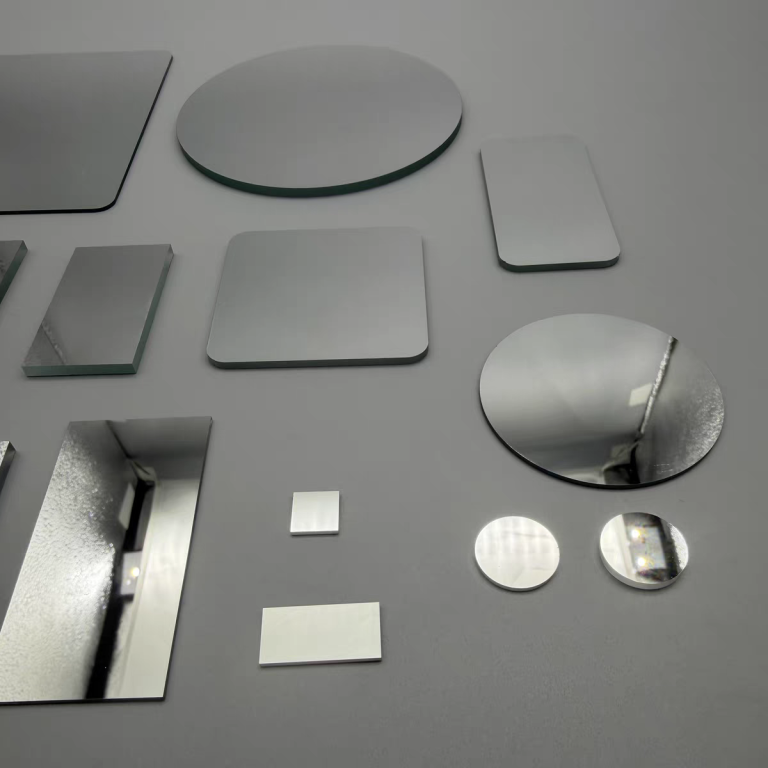
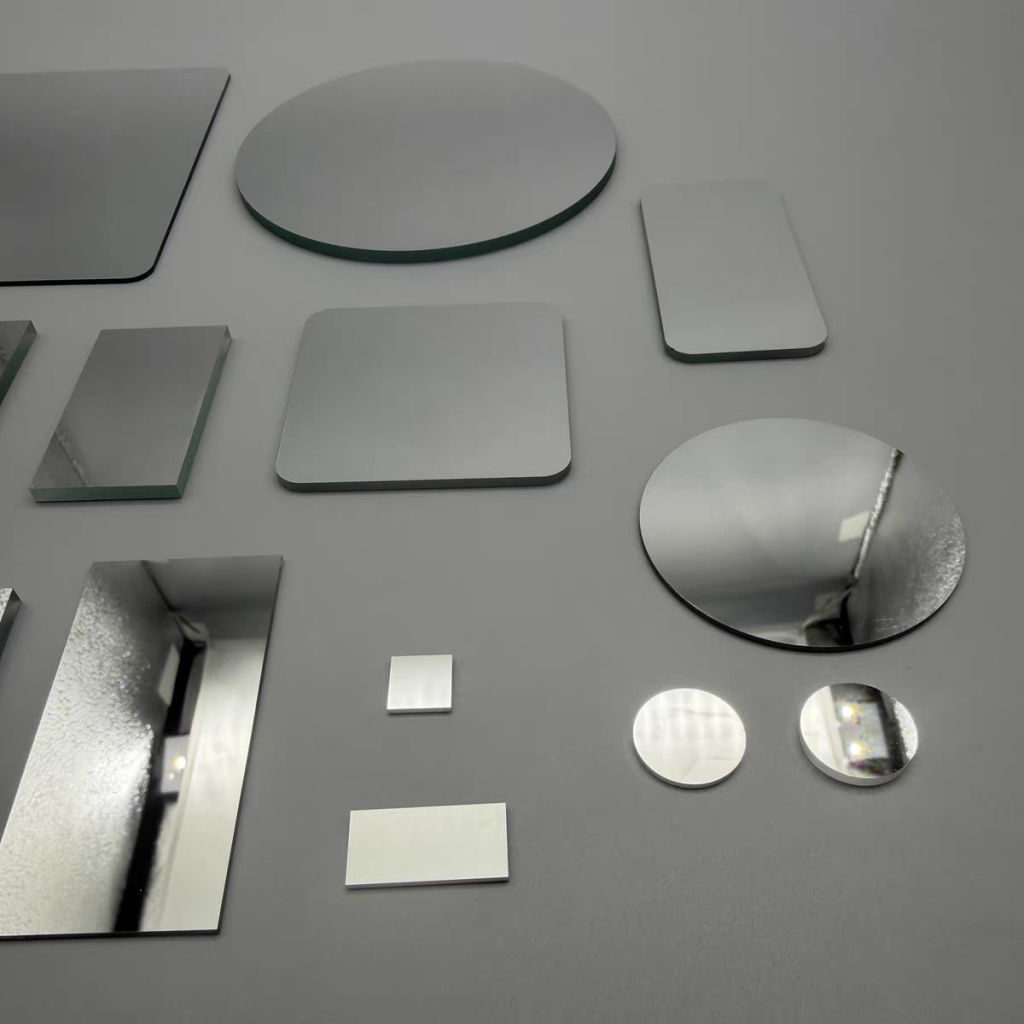
| Processing | Custom cutting, shaped cutting, edging, drilling and drawing-based fabrication | Send drawings before quotation because processing changes yield and risk. |
| Lead time | Custom cutting, drilling or jumbo orders generally 7-15 working days after deposit and drawing confirmation | Ready-stock sheets can support faster response, subject to availability. |
Price Table for RFQ Planning
| Quotation Item | Common Use | Price Status | Main Cost Drivers |
|---|---|---|---|
| Ready-stock raw sheet | Samples, optical labs, projector trials and scanner builds | Quoted by thickness, sheet size, quantity and trade term | Thickness, selected stock size, MOQ, packing and destination |
| Cut-to-size mirror | Projector mirrors, scanner mirrors, HUD optical plates and equipment parts | Requires quotation by finished size and drawing | Cutting yield, tolerances, edges, holes, shapes and inspection level |
| Jumbo or special-size route | Large optical simulation chambers, aerospace or industrial optical systems | Project quotation | Size review, handling, flatness expectation, crate design and transport route |
| Sample or small order | Research, laboratories and new-customer testing | Sample terms confirmed by sales | Thickness, size, stock availability, courier destination and inspection request |
Use these cost drivers to prepare a comparable quotation. Specify thickness, dimensions, quantity and precision processing, then confirm the currency, unit, tax, EXW or FOB scope, packing and freight included in each offer.
How Thickness Changes the Buying Decision
Thin glass such as 1.1 mm or 2 mm can fit compact optical equipment where weight and space matter. Medium thicknesses such as 3-6 mm are common starting points for scanners, projection systems and protected equipment assemblies. Thicker 8-15 mm sheets are considered when the design needs larger format, stiffness or a heavier support structure. The correct thickness should match the optical path, mounting method, vibration risk and finished size.
Raw Sheet vs Finished Mirror
A raw sheet quotation covers the coated sheet format. A finished mirror quotation must also include cutting yield, edgework, holes, shape processing, dimensional tolerance, inspection, separators and export packing. Two projects with the same total square metre area can have different costs if one uses many small precision parts and the other uses large rectangles with better yield.
How North One Glass Helps Buyers Reduce Cost
North One Glass maintains multiple standard sheet sizes and can review finished dimensions or drawings before production. Choosing a better raw-sheet format can reduce offcuts, lower processing loss and make export packing more practical. This is especially important for projector, scanner and equipment makers buying repeated part sizes. For product context, review the First Surface Mirror product family and the 95% First Surface Mirror product page. For a project quote, send the drawing through the contact page.
Buying Mistakes to Avoid
- Comparing a raw-sheet quote with a cut-to-size finished mirror quote.
- Omitting the finished-size list and asking only for a square-metre price.
- Assuming a normal rear-surface mirror can replace a front-surface optical mirror in a precision optical path.
- Touching or cleaning the exposed coated face like ordinary bathroom mirror glass.
- Assuming tempering, lamination or outdoor certification without project-specific confirmation.
- Ignoring export crate design for large, thin or precision-cut mirrors.
Quotation Preparation Notes
Send the product name, visible-reflection or optical target, thickness, raw-sheet or finished dimensions, quantity by size, drawing, tolerances, edgework, drilling, optical application, inspection request, packing method, destination and trade term. If the mirror goes into a projector, scanner, HUD or semiconductor tool, include the optical path and mounting constraints.
FAQ
Q: How much does a First Surface Mirror cost?
A: Prices are quoted for the specified order. North One Glass quotes by thickness, size, MOQ, precision processing, inspection and packing.
Q: What should be included in a price request?
A: Include thickness, finished dimensions, quantity by size, drawing, tolerance, edgework, holes, optical target, application, destination and trade term.
Q: Is 95% reflection a confirmed value?
A: Yes. North One Glass supplies first surface mirrors with visible light reflection reaching 95%.
Q: Can small sample orders be supported?
A: Yes. Sample orders and small orders are supported for optical laboratories, research and new-customer testing. Confirm sample preparation and courier charges for the required size and destination.
Q: What is the lead time for custom orders?
A: Custom cutting, drilling or jumbo orders are generally 7-15 working days after deposit and drawing confirmation.
Q: Can I buy a jumbo First Surface Mirror?
A: Custom size capability reaches up to 3300 x 16000 mm, subject to optical, processing, handling, packing and transport feasibility.
Q: Does the quote include tax and freight?
A: That must be defined in the RFQ. Ask for the currency, unit, tax status, EXW or FOB scope, packing and freight items before comparing quotes.