Dichroic Glass Processing and Applications: Appliances, Furniture, Facades and Project Cases
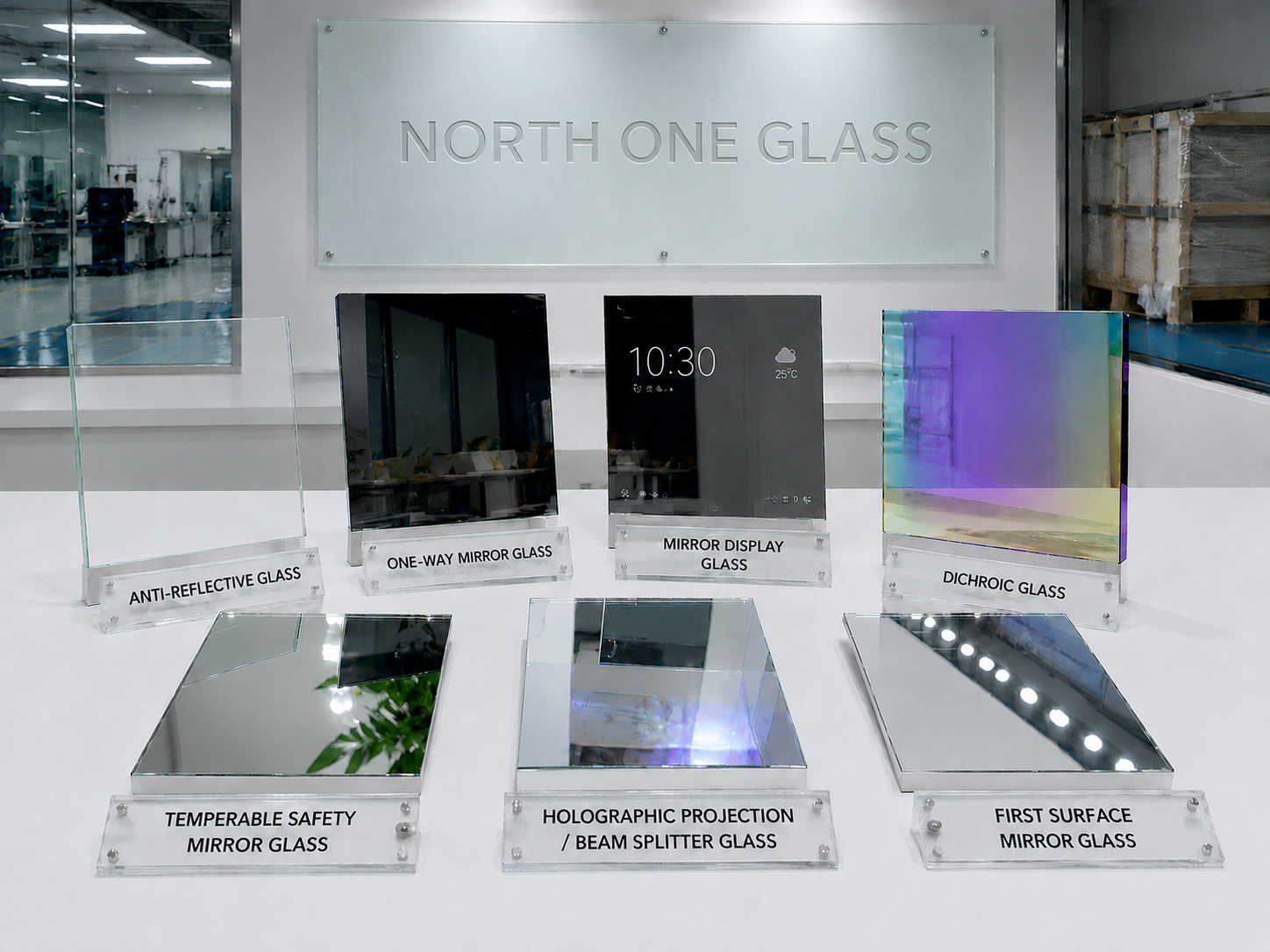
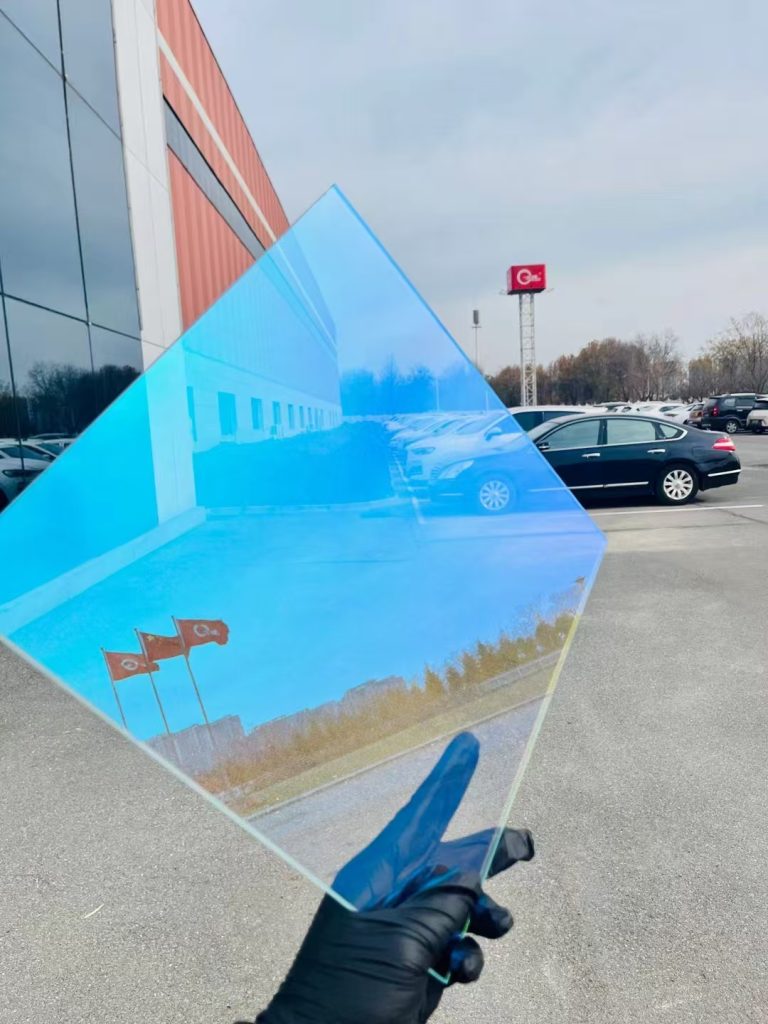
Dichroic glass can serve a thin appliance panel, a furniture surface or a large outdoor facade, but those projects should not use the same thickness and processing route. The buyer needs to coordinate optical color, viewing angle, substrate, safety, edgework, mounting, weather exposure and export handling. The coating creates the visual effect; the complete glass construction makes the project usable.
Processing Capability
| Processing | Typical Purpose | Design Information Needed |
|---|---|---|
| CNC cutting and shaped processing | Custom outlines for appliances, furniture and installations | CAD profile, tolerances and corner details |
| Polished, round or beveled edges | Safe handling and finished decorative appearance | Edge type, bevel width and visible edge requirement |
| Holes, notches and cut corners | Hardware, sensors, fittings and structural connections | Diameter, position, edge distance and drawing |
| Physical tempering at about 600-700°C | Safety and mechanical strength | Thickness, finished size and all pre-tempering processing |
| High-temperature silk-screen printing | Borders, graphics and concealed mounting areas | Artwork, color and print location |
| PVB/SGP/EVA lamination | Fragment retention and safety glazing | Glass build-up, interlayer and environment |
| Insulating glass such as 5+12A+5 | Facade thermal/acoustic construction | Glass build-up, spacer, coating position and sealants |
All holes, notches and edgework should be confirmed before tempering. A drawing change after tempering normally means remaking the panel.
Appliance Panels and Industrial Design
Thin 1.1mm-4mm dichroic glass can be used for cooker-hood panels, refrigerator decorative doors, smart-speaker surfaces and framed product accents. The visual goal is usually a clean technological appearance without adding excessive weight. The buyer should check flatness, substrate color, edge treatment, printing and adhesive compatibility. A small color sample is not enough when the appliance has a black display, metallic frame or internal lighting behind the glass.
Furniture and High-End Interiors
4mm-8mm is a common starting range for color-shifting tables, artistic screens, display-cabinet backgrounds, partitions and brand image walls. Polished edges and tempering are often more important than the raw-sheet price because the glass remains close to users. Lighting design has a major effect. A dichroic partition near daylight changes differently from a backlit display cabinet. Designers should approve the sample against the actual floor, wall and merchandise colors.
Retail and Luxury Brand Spaces
Dichroic glass is used in flagship-store windows, display partitions and custom counters because the color changes as customers move through the space. Approved project references include the LV Tokyo Ginza store and a customized Galeries Lafayette Paris luxury retail display area. For retail projects, the key purchasing issues are visual consistency across adjacent panels, clean edge alignment, replaceable panel identification and protective packing by installation sequence.
Scenic Landscapes, Parks and Public Art
Outdoor light mazes, city sculptures, landscape walls and scenic-area structures use daylight and movement to create the color effect. Approved references include a large Hulunbuir grassland dichroic landscape installation and a joined light-and-color garden landscape in a Hamburg city park. These environments require more than coating durability. The project must review wind load, impact safety, edge protection, drainage, compatible sealants, cleaning access and possible vandalism or repeated public contact.
Facades and Heavy Architectural Panels
10mm, 12mm and 15mm are project routes for heavy decorative and curtain-wall applications. Laminated or IGU construction may be required for safety, thermal performance or fragment retention. North One Glass can review jumbo coating up to 3300 x 16000mm, but final processed size depends on tempering, lamination, transport, lifting and installation feasibility. The facade contractor should send the module drawing before fixing the support system.
Processing and Quality Risks to Avoid
Do not allow several processors to handle the coating without clear responsibility for defects. Confirm whether the delivered price covers raw sheet, cut size or fully processed panels. Protect coated surfaces during storage and avoid dragging sheets against each other. For color-sensitive joined panels, mark the sheet orientation and installation sequence. Adjacent panels should be inspected together under the intended lighting.
Export Packing
North One Glass uses anti-mildew powder or moisture-resistant paper between sheets, reinforced fumigation-free wooden crates or A-frames, steel bands and internal shock buffering. Mixed-size processed panels should be packed and labeled in installation order where possible. The buyer should include unloading equipment and site access in the packing discussion. A crate designed for a warehouse forklift may not suit a narrow landscape installation site.
FAQ
Can dichroic glass be used as the outer pane of laminated glass?
It can be reviewed as an inner or outer lite, but the coating position, interlayer, edge protection and environment must be confirmed for the project.
Can dichroic glass be hot bent?
Hot bending can be reviewed for selected routes, but radius, shape, coating behavior and color appearance require a dedicated sample and production assessment.
How should adjacent facade panels be approved?
Approve processed panels under consistent lighting, mark their orientation and inspect the joined color transition before shipment or installation.