Processing and Export Supply
North One Glass provides customer-led coated-glass solutions, in-house glass processing in China and international project delivery. Our company-level services include glass cutting, edge grinding, double-edge processing, drilling, laser processing, optical testing and quality inspection.
We review the selected model, drawing and processing requirements for each order. Share your quantity, finished dimensions and destination to request coated-glass supply or custom finished components with export packing.
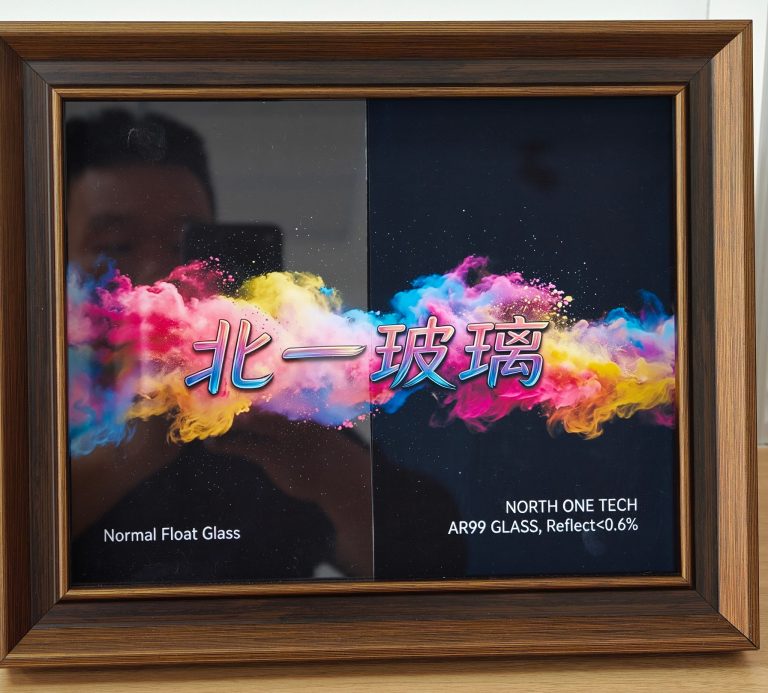
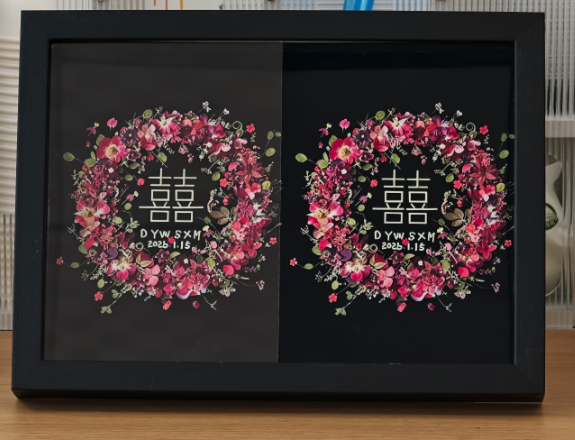
Custom Anti-Reflective Glass for Displays, Framing and Showcases
North One Glass supplies custom anti-reflective glass for displays, framing and showcases. Select AR94, AR98 or a UV-filtering grade by the substrate, coated sides, optical target and finished construction. Send the panel dimensions, thickness, quantity, processing requirements and destination for coating selection, sample review and a finished-panel quotation.
Compare Anti-Reflective Glass and UV-Protection Routes
| Route | Selection priority | What to verify |
|---|
| AR94 / AR98 | Visible clarity and reflection control | Grade, thickness, coated sides, visible-light weighting and incidence angle |
| Custom UV-protective AR | UV reduction with clear viewing | Target UV range, test method, final construction and matching sample data |
| Legacy UV75 | Earlier UV-protective option | Current availability, construction and applicable optical data |
| UV99 target | Higher UV-protection requirement | May require laminated construction; confirm feasibility and verified report |
AR98 visible-light transmission can reach up to 99% under the selected coating and test conditions. This is separate from UV blocking. For a 5,000-cycle steel-wool requirement, request a test record for the selected coating, including steel-wool grade, applied load, rubbing sequence and pass criteria.
Performance and Test Conditions
Compare optical figures for the selected grade using the same substrate, thickness, coated sides, wavelength range, incidence angle and measurement method. Request the matching sample and available optical data rather than combining values from different grades.
Processing, Samples and Delivery
North One Glass develops application-specific optical targets, evaluates samples and supplies the selected coated glass grade. Our own facility in China carries out cutting, precision edging, laser processing and tempering for compatible glass grades. Each order is checked against the drawing and processing requirements. Confirm dimensions, tolerances and the fabrication sequence before sample approval. Packing and the dispatch schedule are agreed for the panel size, quantity and destination.
Prepare Your Inquiry
Send your application, preferred grade or target performance, dimensions, thickness, quantity, edge and hole details, safety-processing needs, destination and sample schedule. A plain-language description is enough to start.
Review the related application · Quality and testing · Request an Anti-Reflective Glass Sample & Optical Data
Read the guide to anti-reflective versus anti-glare glass and review the product family before sending the finished drawing for quotation.
UV Shield 80 for Framing and Display Glazing
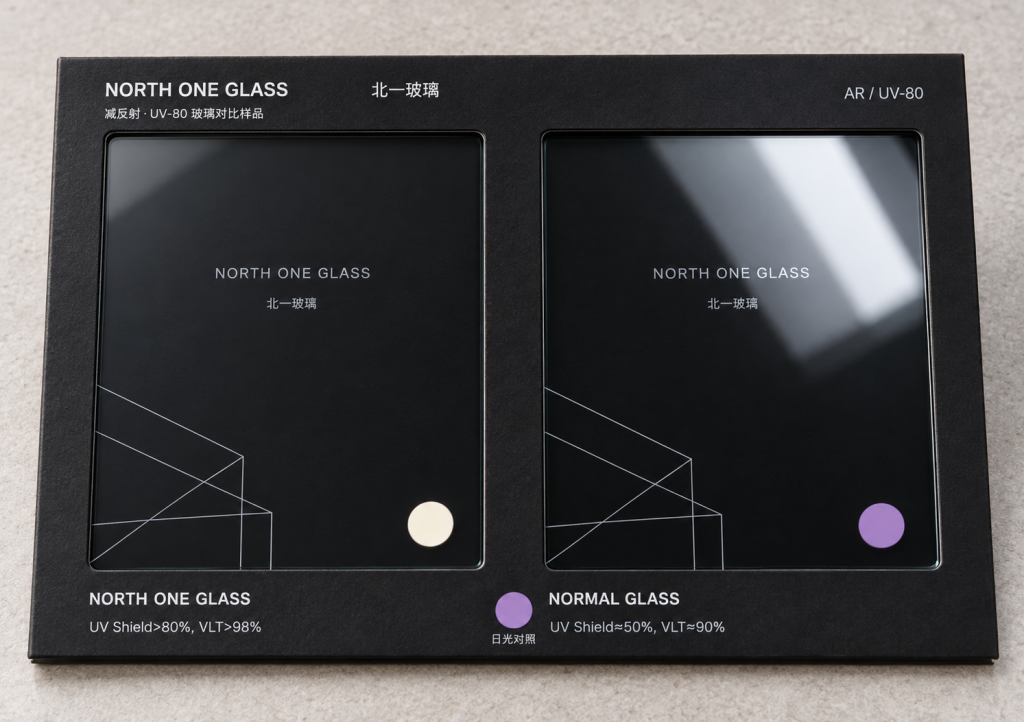
For the 2.0 mm low-iron, double-coated reference, the TDS reports approximately 80.5% weighted UV rejection and 98.5% D65-weighted visible transmission over 380–780 nm. The TDS lists a UV band of 280–380 nm. Standard sheet formats and the 2600 × 6000 mm delivered maximum belong to this grade, separately from the overall jumbo coating capability.
UV Shield 80 product · UV Shield 80 technical data · Public test report library · Request the UV Shield 80 sample report
Reference Specifications
Anti-Reflective Glass Selection Questions
How do I choose between AR94, AR98 and UV Shield 80?
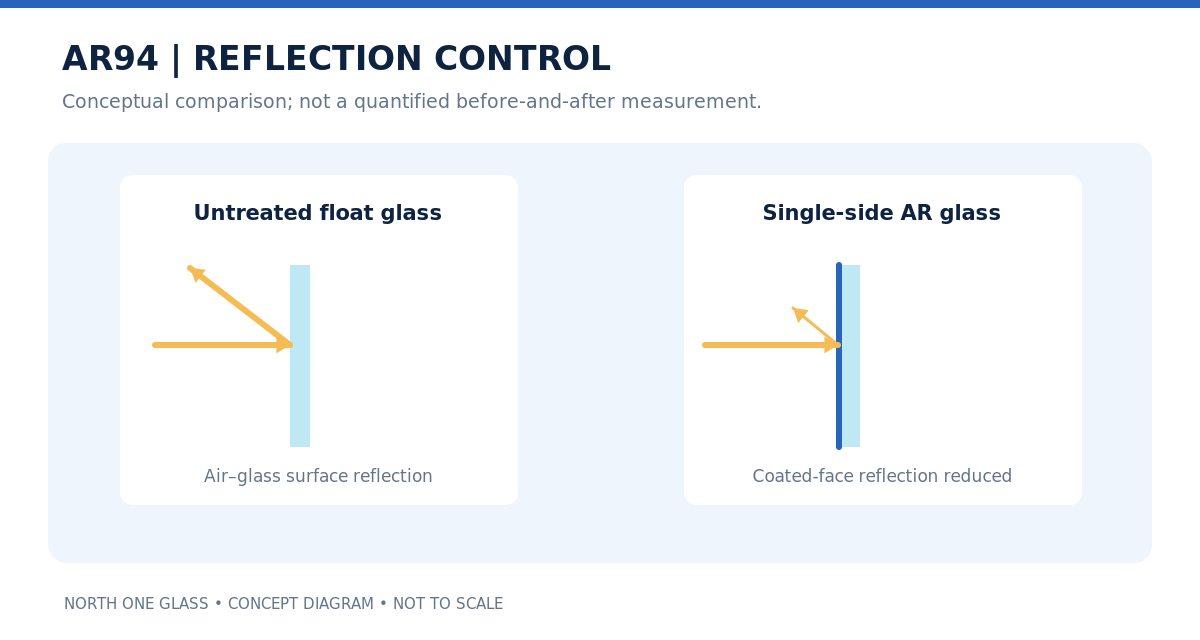
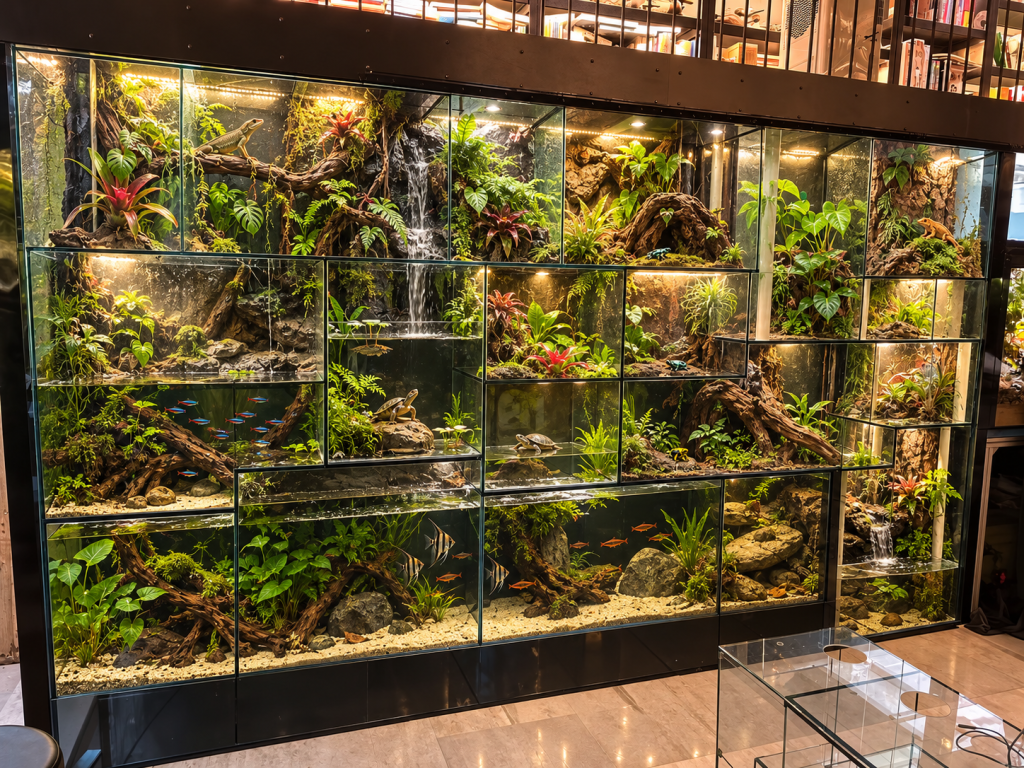
Choose AR94 for single-sided AR in laminated glass or water-filled aquariums, AR98 for high-transparency double-sided AR applications, and UV Shield 80 for framing and artwork displays requiring defined UV protection.
Which product offers UV protection for picture framing?
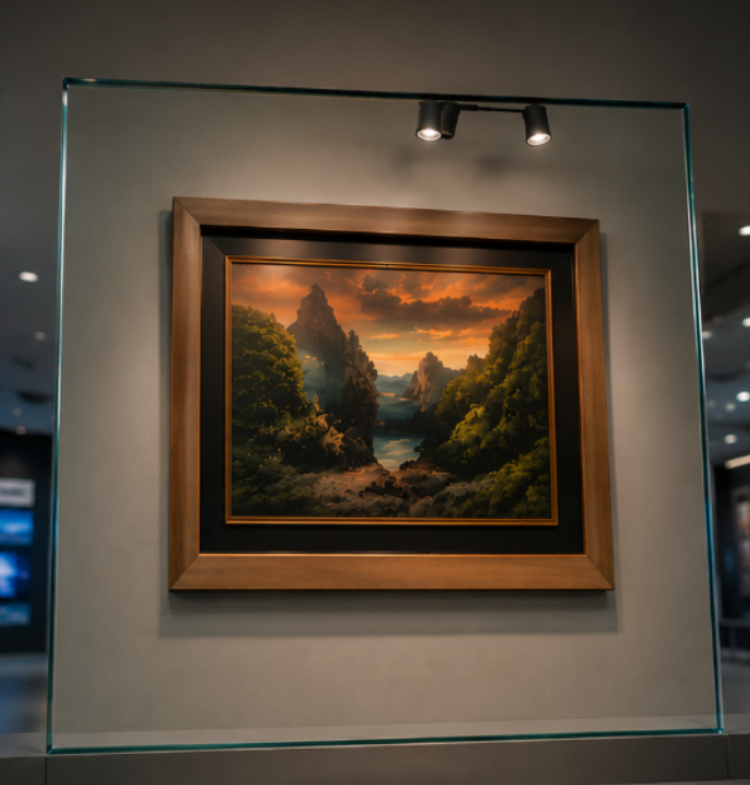
UV Shield 80 offers UV Blocking ≥80% across 280–380 nm using EN 410 weighting, together with VLT ≥98.2% and double-sided anti-reflective coating.
Can North One Glass quote a UV70 or AR70 alternative?
Send your existing UV70 or AR70 product specification, required dimensions and estimated order quantity. North One Glass offers UV80 anti-reflective glass with more competitive B2B pricing for quotation and sample comparison.
What information helps you quote the right glass?
Send the application, selected model, glass construction, thickness, dimensions, quantity, processing drawing and destination. You can also apply for a complimentary sample through the existing sample form.
How do anti-reflective glass and anti-glare glass differ?
Anti-reflective coatings reduce specular reflections while preserving visible detail. Anti-glare surfaces diffuse reflected light. Compare samples using the actual lighting, viewing distance, display brightness and image-clarity requirement.
What is the difference between anti-reflective glass and UV protection?
Anti-reflective glass reduces surface reflections. UV protection reduces transmission within a defined ultraviolet range. Visible-light transmission and UV blocking are different measurements and must be specified separately.
How should I compare AR98 and AR94?
Compare labeled samples, visible-light transmission, surface reflection, coated sides, thickness and the test method. AR98 transmission can reach up to 99% under the selected coating and test conditions; AR94 is a separate grade.
Which UV-protective construction should I specify?
Send the required UV reduction, wavelength range, test method and final construction. UV50, UV65 and UV80 targets can be discussed separately. Ask about availability and the matching sample data; they are not interchangeable optical specifications.
Is UV99 a standard monolithic coating?
A UV99 target may require a laminated construction. Feasibility and verified test data must be confirmed for the final construction. Do not select a monolithic AR grade on the assumption that it also provides 99% UV blocking.
What about the earlier UV75 option?
Ask our team about the legacy UV75 option and its available construction and test data. It should be compared separately from current AR and custom UV-protection requirements.
How scratch-resistant is the coating on anti-reflective glass?
The coating has been tested through 5,000 steel-wool rubbing cycles without visible coating damage. Request the applicable test method and conditions for your selected grade.
Can anti-reflective glass be cut, tempered or laminated?
Cutting, edging, holes, tempering and lamination are reviewed by coating grade and processing sequence. Specify the finished dimensions and safety-glass construction before approving a sample.
How do I request custom anti-reflective glass panels?
Specify the application, preferred grade, substrate, thickness, coated sides, optical targets, finished dimensions, processing requirements, quantity and destination. Include a drawing and the required sample or test-report schedule.
What is anti-reflective glass and how should a custom panel be specified?
Anti-reflective glass uses an optical coating to reduce surface reflection and improve the view through the glass. An antireflection coating or AR coating enquiry should identify the application, substrate, coating sides, visible reflection and transmission targets, thickness and final construction. Compare the selected AR94, AR98 or UV grade using its own optical data and processed sample.
How does anti-reflective glass differ from anti-glare glass?
Anti-reflective coatings reduce surface reflection while preserving visible detail. Anti-glare finishes diffuse reflected light. Compare actual samples using the viewing distance, display or artwork, lighting and the required image clarity.