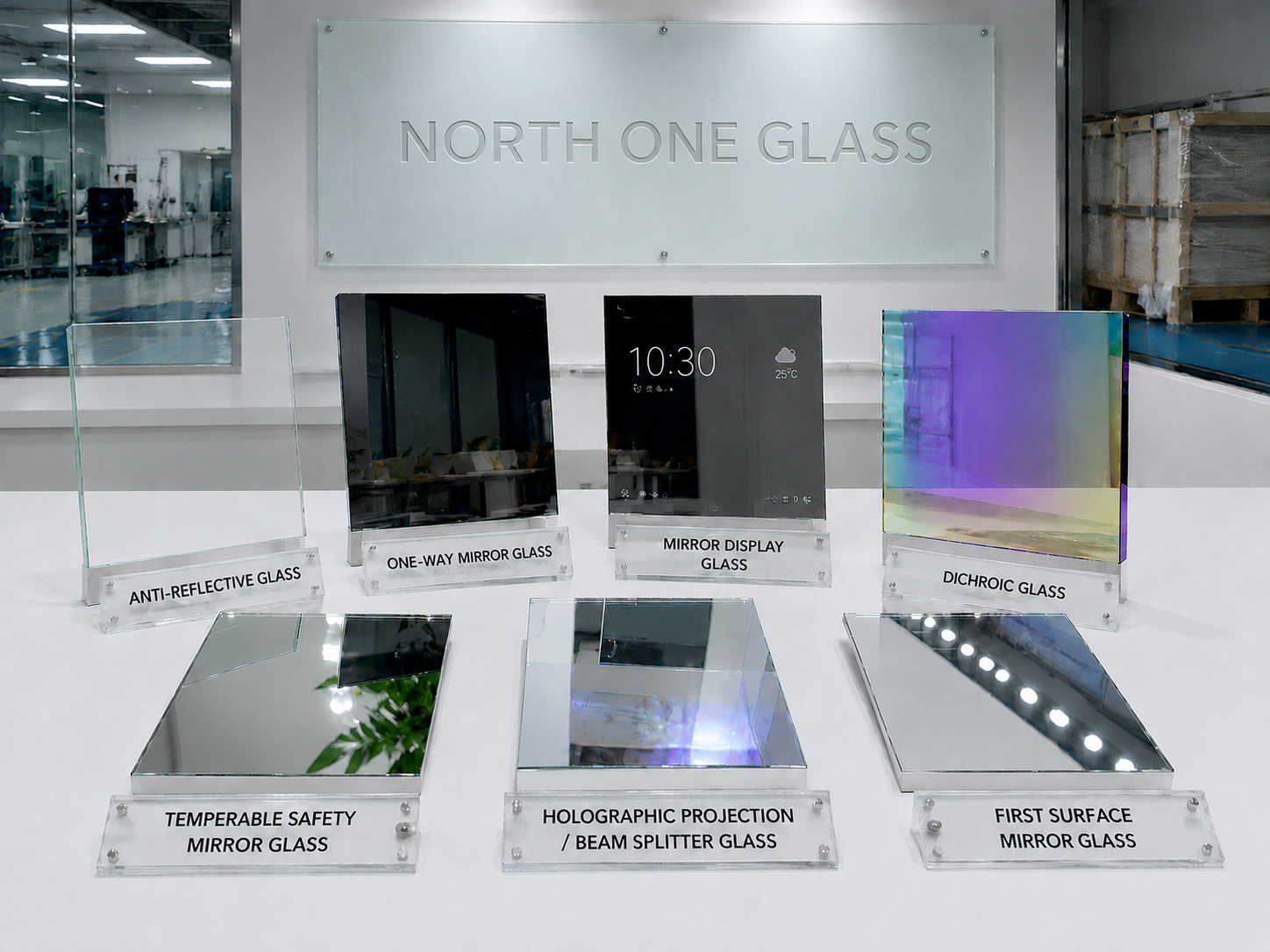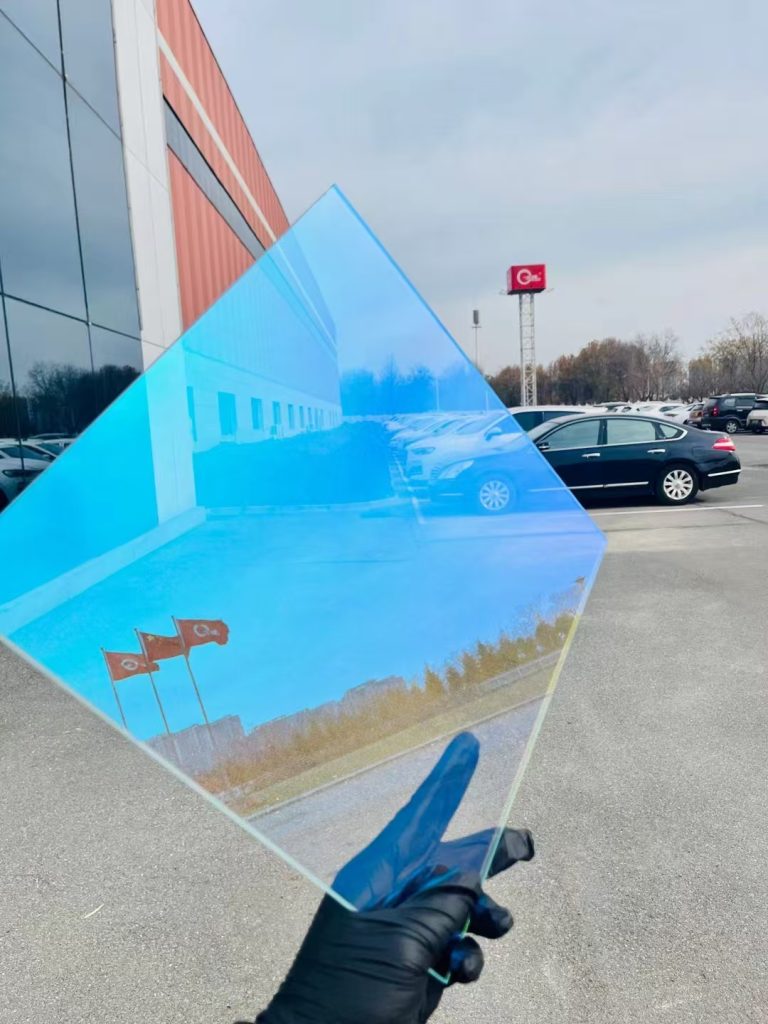
Dichroic coated glass and dichroic film can both create changing colors as the viewing angle and lighting change. Their visual similarity in a small photograph does not make them interchangeable. Coated glass integrates the optical layer with a rigid glass substrate, while film is a flexible layer applied to or laminated with another material.
TL;DR
- Choose dichroic coated glass when the glass itself must be the specified architectural or display component and the project needs controlled fabrication and repeatable optical samples.
- Consider film when a lightweight overlay, retrofit route, or film-specific laminate is appropriate.
- Approve real samples under the project's daylight, artificial lighting, background, angle, and glass build-up. Color names alone are not reliable specifications.
Compare the complete construction
The visible result depends on more than the color family. Review the substrate color and thickness, coating or film orientation, transmitted and reflected views, background, angle of incidence, interlayer, adhesive, surface texture, and lighting spectrum. A sample photographed on a white desk may look very different when installed against sky, planting, metal, a dark wall, or an illuminated display. Coated glass can be cut and processed according to the approved coating and substrate route. Film requires its own compatibility review for adhesion, edge details, laminating, heat exposure, moisture, cleaning, and replacement. The correct comparison is therefore coated-glass assembly versus film assembly, not coating versus a loose roll.
Questions for design and procurement
Start with the Dichroic Glass category and review the Radiant Orange coated glass product. For alternative coated-glass families, use the products hub.
- Is the installation interior, exterior, laminated, insulated, or exposed?
- Which colors should appear in reflection and transmission?
- What viewing angles and light sources matter most?
- Are custom shapes, holes, edgework, printing, tempering, or lamination required?
- How will edges, sealants, adhesives, and coatings interact?
- What sample size and approved reference will control production color?
Treat mock-ups as part of specification
Dichroic appearance is intentionally dynamic. That makes a signed physical sample and documented viewing setup especially important. Record the substrate, build-up, coating side, background, angle, and lighting used for approval. For large facade or landscape work, a representative mock-up helps reveal panel-to-panel appearance and installation effects before volume production.
FAQ
Is dichroic film the same as dichroic coated glass?
No. Film is a separate flexible layer used with a substrate, while coated glass is supplied as a rigid optical glass component. Their processing and service considerations differ.
Can a screen image be used as the final color standard?
No. Cameras, displays, angle, background, and lighting alter the appearance. Use an approved physical sample and documented viewing conditions.
What should be included in a dichroic glass enquiry?
Send drawings, sizes, substrate and thickness, target color behavior, coating orientation, lighting and background, processing, installation environment, quantity, and destination through the contact page.