One-Way Mirror Glass Price Guide: Thickness, Processing and Sourcing Cost
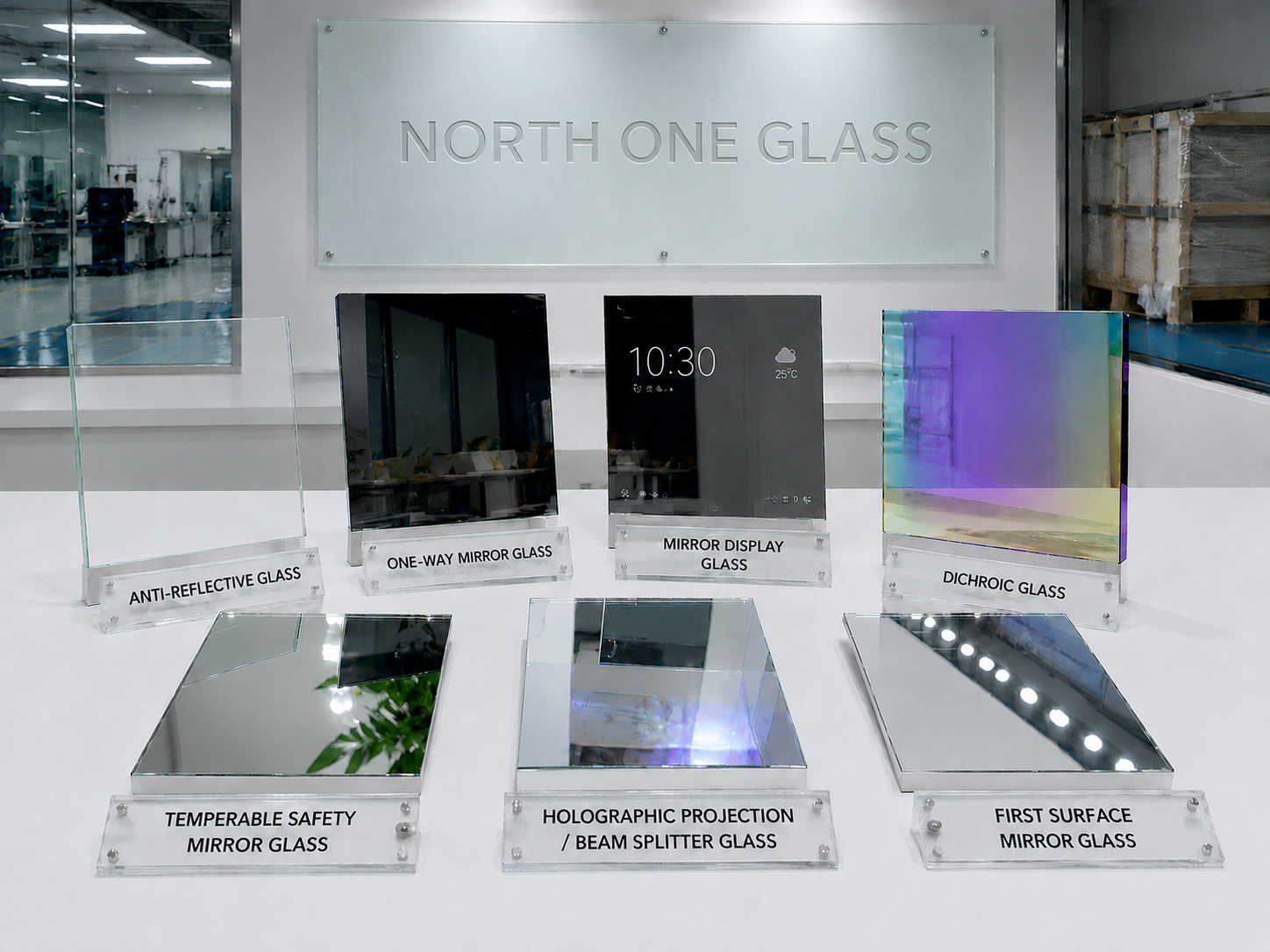
One-way mirror glass pricing is not just a square-meter number. A buyer may see a reference price such as about $10/m2, $15/m2 or $20/m2, but the final quotation can change quickly when the project moves from raw sheet to tempered glass, laminated safety glass, insulated glass, jumbo panels, edge polishing, drilling, export packing or mixed-size cutting. North One Glass supplies one-way mirror glass for electronics panels, infinity mirror projects, observation rooms, privacy partitions, wine cabinets, facade decoration, outdoor mirror houses and custom B2B glass projects. The standard reference optical route is about 15% visible light transmission and 75% reflection, with custom transmission/reflection ratios available for project review. This guide explains the reference price bands, where each thickness is normally used, what changes the cost, and what a buyer should send to get a quotation that is useful instead of vague.
Quick Reference: One-Way Mirror Glass Price by Thickness and Use
The table below uses owner-provided reference factory price ranges. Treat them as budget guidance, not as a final finished-project quotation.
| Thickness / Structure | Product Form | Reference Factory Price | Common Applications | What Can Change Final Price |
|---|---|---|---|---|
| 1.1mm | Raw sheet / finished panel | About $15/m2 | Power banks, laptop panels, small appliance panels, infinity mirror effects | Cutting yield, panel size, surface protection, quantity, packing |
| 2.0mm | Raw sheet | About $10/m2 | Thin infinity mirrors, display covers, precision optical frames | Raw-sheet size, cutting loss, optical ratio, order quantity |
| 3.2mm | Tempered finished glass | About $15/m2 | Premium cabinet doors, smart appliance panels, embedded mirror displays | Tempering, edgework, drilling, panel dimensions, breakage risk |
| 4.0mm-10.0mm | Tempered finished glass | About $10-$20/m2 | Wine cabinets, infinity mirror installations, doors, windows, privacy partitions, facade decoration, mirror houses, interrogation rooms, observation windows, recording rooms | Thickness, finished size, tempering route, holes, edgework, packing |
| 12.0mm-15.0mm | Extra-thick tempered finished glass | Project quotation | Landmark scenic mirror-house projects, high-strength privacy facades | Structural review, jumbo size, handling, processing difficulty, crate design |
| 5+1.14PVB/SGP+5 | Laminated safety glass | Custom quotation | High-rise curtain walls, suspended outdoor invisible houses, safety glazing | PVB/SGP route, lamination yield, thickness, engineering requirement |
| 5+12A+5 | Insulated glass unit | Custom quotation | Premium windows, doors and curtain walls needing privacy, safety, insulation and acoustic reduction | Spacer, sealant route, glass combination, size, packing, destination |
The most important point: raw-sheet prices and finished-glass prices are not the same thing. Finished price can include cutting loss, tempering risk, edge polishing, drilling, lamination, IGU assembly, protective interleaving, wooden crate packing, inland transport, freight and order schedule.
Why 1.1mm, 2.0mm and 3.2mm Are Often Used for Panels
Thin one-way mirror glass is usually selected when the buyer needs a decorative or optical panel rather than a heavy structural glass panel. Common uses include power-bank panels, laptop decorative panels, small appliance surfaces, display covers and compact infinity mirror effects. For these projects, the buyer's pain point is not only price. The panel must be thin enough for the product structure, consistent enough in mirror appearance, and packed safely enough to avoid scratches or breakage during export. Small panels can also create yield issues if many different sizes are cut from a large coated sheet. For cost control, send a complete size list before quotation. If the factory can plan the cutting layout around available raw-sheet sizes, the buyer may reduce waste and avoid paying for material that becomes unusable offcut.
Why 4mm-10mm Tempered Glass Is Common for B2B Projects
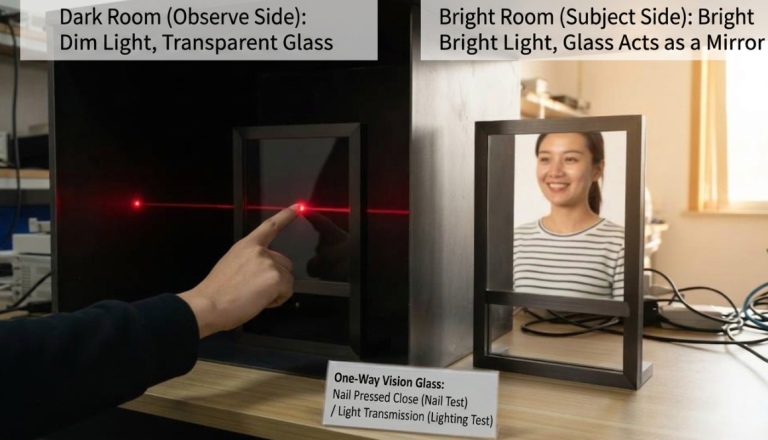
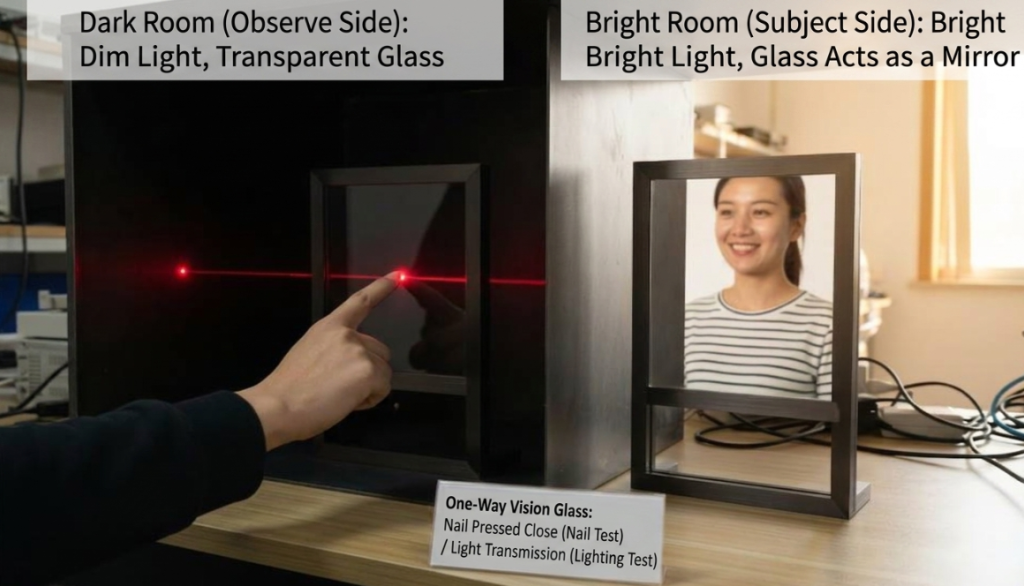
The 4mm-10mm range is often reviewed for stronger finished panels. Typical uses include wine cabinets, commercial infinity mirror installations, privacy partitions, doors, windows, interrogation rooms, observation windows, recording rooms, facade decoration and scenic mirror-house projects. In this range, processing becomes a major part of the quotation. Tempering, edge grinding, drilling and cut-to-size work all affect yield and risk. A simple square-meter price is not enough if the project has holes, notches, polished edges or many different panel sizes. Buyers should also confirm the lighting condition. One-way mirror glass does not create privacy by itself in every environment. The observed side should remain brighter, and the observation side should remain darker. A lighting ratio around 10:1 is recommended; 5:1 should be treated as the minimum practical threshold when privacy matters.
Why 12mm-15mm, Laminated and IGU Routes Need Project Quotation
Extra-thick tempered glass, laminated safety glass and insulated glass units are not suitable for a simple fixed price table. These constructions are normally used when the project needs higher strength, safety, outdoor durability, acoustic reduction, insulation or large-format installation. For outdoor mirror-house and scenic-area projects, the quote may need to review wind load, panel size, fixing method, edge protection, transport route, crate design and installation environment. For laminated glass such as 5+1.14PVB/SGP+5, the interlayer route and final construction affect safety, production yield and price. For IGU routes such as 5+12A+5, the spacer and sealing construction also become part of the cost. If the project is large or exposed outdoors, do not buy by price alone. A lower unit price can become expensive if the glass is difficult to install, unsuitable for the structure or packed in a way that increases breakage risk.
How Raw-Sheet Size and Cutting Yield Affect Cost
Cutting yield is one of the easiest cost factors to miss. A buyer may request 500 m2 of finished glass, but if the sizes do not nest efficiently on available raw sheets, the factory may need to use more coated glass than the final shipped area. North One Glass can match projects with multiple regular raw-sheet sizes, from about 915*1220mm to 3300*4880mm, and can review jumbo coated glass up to 3300*16000mm. When buyers provide a cutting layout or a detailed size schedule, the factory can choose a better raw-sheet route and reduce offcut waste. This matters especially for:
- mixed-size appliance panels;
- long narrow privacy strips;
- facade panels with different heights;
- observation windows with finished holes or polished edges;
- scenic mirror-house panels that require large visible surfaces.
What Is Usually Not Included in a Simple Reference Price
When comparing offers, ask each supplier what the price includes. A reference raw-sheet price may not include:
This is why two quotes with similar square-meter prices can have very different final landed cost.
- cutting to finished size;
- tempering or heat treatment;
- edge polishing or rough grinding;
- drilling, notches or shaped cutting;
- lamination or IGU processing;
- yield loss and unusable offcuts;
- protective film, interleaving paper or anti-mold material;
- export wooden crate packing;
- inland trucking;
- sea freight, insurance or destination charges;
- urgent production schedule.
Buying Mistakes That Create Extra Cost
The first mistake is sending only total square meters. Glass is produced and packed by actual panel dimensions, not by area alone. Length, width and thickness must be separate fields. The second mistake is comparing raw sheet with finished tempered glass. A raw sheet may look cheaper, but the buyer still needs cutting, processing, packing and quality control. The third mistake is ignoring coating side and installation direction. For one-way mirror applications, the reflective side and the lighting direction must be confirmed before production and installation. The fourth mistake is treating PET one-way film and sputtered coated glass as the same product. Film may be useful for temporary retrofit work, but factory-coated glass is usually stronger for long-term projects that require tempering, drilling, lamination, outdoor use or consistent optical appearance. The fifth mistake is choosing the lowest crate cost for export glass. Good packing is part of the product. Heavy glass, large glass and mixed-size glass need crate design, internal cushioning and clear loading planning.
Why Source from North One Glass
North One Glass is suitable for buyers who need more than a commodity mirror sheet. The factory can review thickness, optical route, raw-sheet size, cutting yield, tempering, edgework, drilling, lamination, IGU construction, packing and export quotation requirements. For standard procurement, the value is fast technical clarification and realistic price comparison. For custom projects, the value is in reducing mistakes before production: wrong thickness, poor yield, unclear lighting condition, weak packing, unsuitable safety route or incomplete RFQ information. North One Glass is especially relevant when the project involves:
- custom one-way mirror glass sizes;
- electronics and appliance mirror panels;
- infinity mirror or abyss mirror effects;
- observation rooms and privacy windows;
- outdoor mirror-house or facade projects;
- laminated or insulated one-way mirror glass;
- export packing and overseas delivery planning.
FAQ
Is $10/m2 to $20/m2 the final price for one-way mirror glass?
No. It is a reference factory price range for common raw or tempered routes. Final price can change with thickness, size, cutting yield, tempering, holes, edgework, lamination, IGU construction, packing, quantity and trade term.
Why does finished size affect the price?
Finished size affects how efficiently the glass can be cut from a coated raw sheet. Poor nesting creates more waste, and the buyer may pay for material that cannot become finished panels.
Is one-way mirror film cheaper than one-way mirror glass?
Usually yes at the initial purchase stage. But film is not the same product route. It can scratch, bubble, yellow or peel in long-term use, and it cannot be tempered as part of the glass itself. For factory-finished panels, safety glass and outdoor projects, coated glass is usually the better route.
Can one-way mirror glass be used outdoors?
Outdoor projects should be reviewed by thickness, safety construction, edge protection, installation route and packing. Extra-thick tempered glass, laminated glass and IGU routes may be more suitable than thin indoor panels.
What is the maximum size North One Glass can review?
North One Glass can review jumbo coated glass up to 3300mm x 16000mm. Final feasibility depends on product route, thickness, processing, handling, packing and transport.
What should I send if I need the fastest quotation?
Send thickness, exact length and width for each size, quantity, processing route, application, lighting condition, destination port and trade term. If the glass needs holes, shapes, lamination or installation review, attach a drawing.