T30 Mirror Display Glass FAQ: Tempering, Touch, Price, Installation and Cleaning
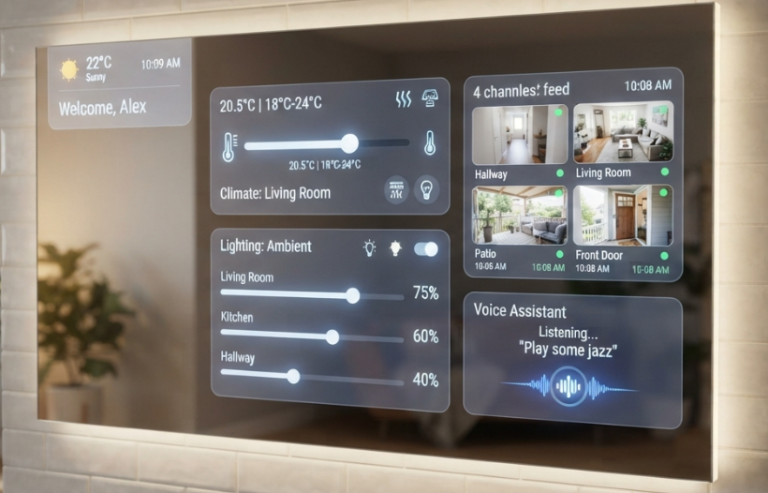
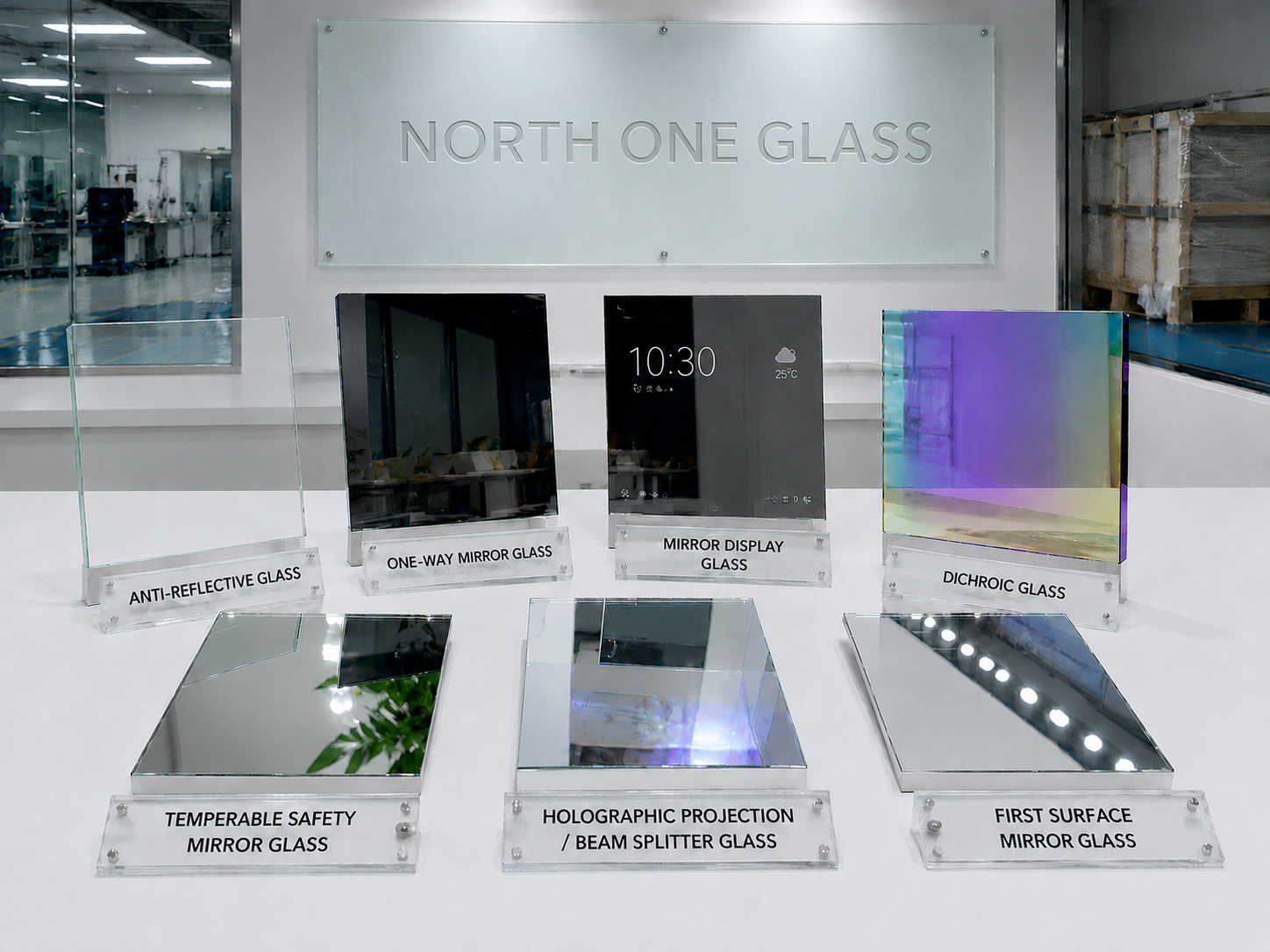
T30/R70 mirror display glass combines about 30% visible light transmission with 70% reflection. It is used when an LCD or OLED must disappear behind a mirror when off and remain visible when on. Its dielectric coating is non-conductive, making it suitable for capacitive touch products. The answers below focus on purchasing, processing, installation and maintenance decisions.
Frequently Asked Questions
Can North One Glass physically temper T30 mirror display glass?
Yes. The T30 and T50 dielectric mirror display routes support high-temperature physical tempering. Thickness, finished size, holes and edge processing must be approved before tempering. The product is designed for high tempering yield and stable color before and after processing.
Why should a smart touch display use dielectric mirror glass instead of metallic one-way glass?
Dielectric coating has very high electrical resistance and does not shield the electric field used by a capacitive touchscreen. Metallic one-way mirror coatings can interfere with that signal, causing dead zones, delayed response or unstable touch behavior.
What is the factory reference price for T30 mirror display glass?
For bulk purchasing, raw sheets are approximately USD 20 per square meter FOB China Port. A basic route including cutting, precision edge polishing and physical tempering is approximately USD 30 per square meter. Final price depends on thickness, finished sizes, cutting yield, processing, quantity and packing.
What is the maximum custom size?
North One Glass can review jumbo mirror display coating up to 3300 x 16000mm. The maximum finished deliverable size still depends on thickness, processing, crate design, transport and installation feasibility.
How is mirror display glass packed for international shipping?
Panels are packed in fumigation-free plywood crates with moisture-resistant separation, anti-mildew protection, internal cushioning and secure fixation. Jumbo or mixed-size orders require a project-specific crate and loading plan to reduce handling and transport risk.
Can North One Glass print a black border to hide the screen frame and cables?
Yes. Black or white silk-screen printing can be produced according to the CAD artwork. The buyer should provide the active display window, border width, hole positions and acceptable printing tolerance.
What is the minimum order quantity?
There is no single public MOQ for every configuration. Standard stock thicknesses can support sample and small trial-order review, while custom optical ratios, jumbo sizes and complex processed panels require a project-specific minimum. Confirm the exact size and processing before relying on an MOQ.
Which side faces the user during assembly?
The non-coated glass side faces the user or outside. The coated side faces the screen or inside. This orientation protects the coating behind the glass substrate and supports better visual clarity. The factory should label the coating side before shipment.
What is the difference between T30/R70 and T50/R50?
T30/R70 gives approximately 30% transmission and 70% reflection, making it suitable when the off-state mirror effect and screen hiding are important. T50/R50 gives approximately 50% transmission and 50% reflection, so the display appears brighter but the mirror hides the screen less effectively.
How should mirror display glass be cleaned?
Use a clean microfiber cloth and a neutral glass cleaner. Remove dust before wiping, avoid abrasive pads and do not scrape the surface with metal tools. Although the coating is resistant to scratching, acid, alkali and humidity, correct installation keeps the coated side protected behind the glass and reduces unnecessary wear.