Mirror Display Glass Processing and Applications: Smart Mirrors to Digital Facades
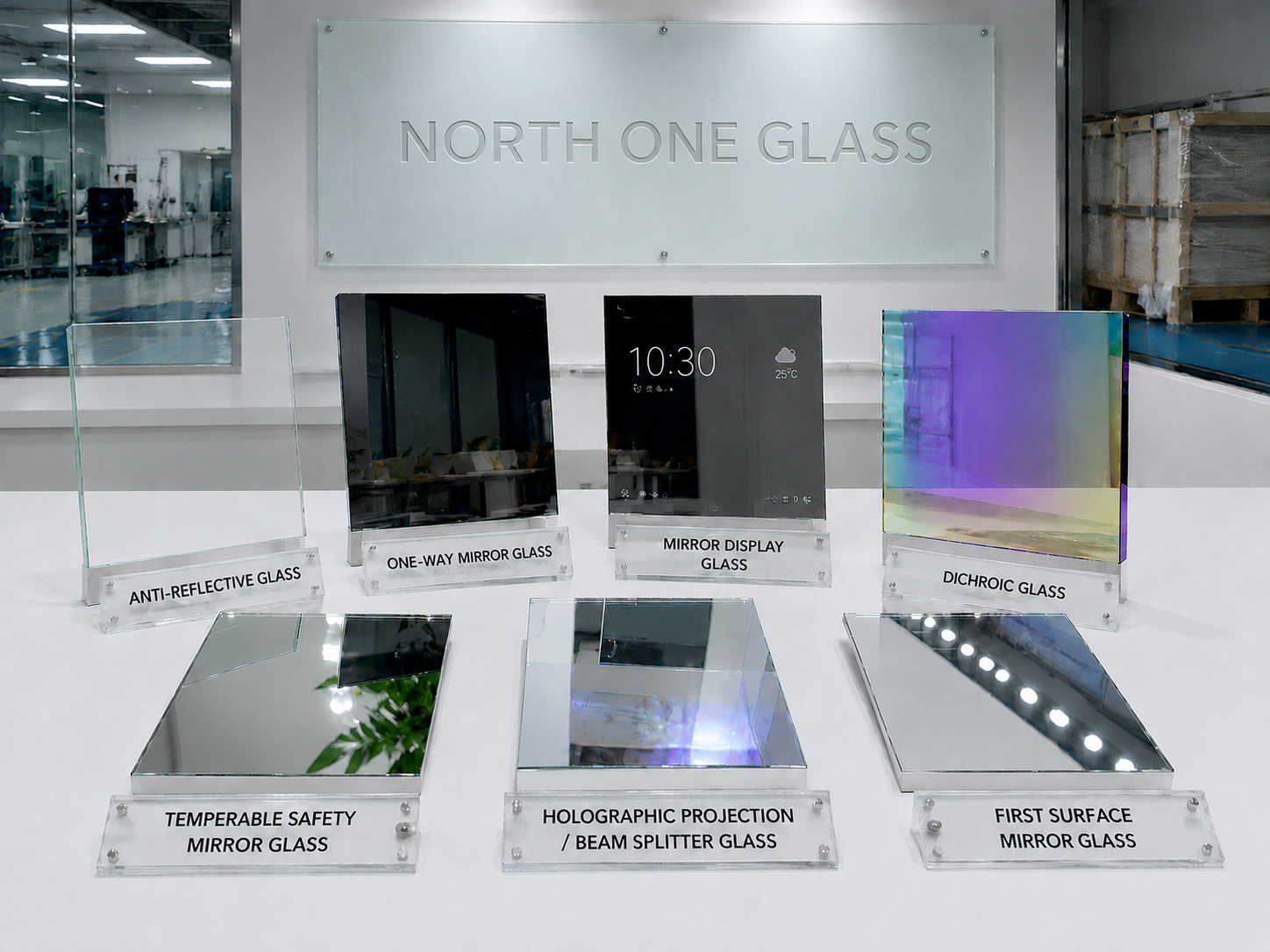
Mirror display glass is used in very different products, from lightweight appliance panels to outdoor digital facades. The optical coating may be the same T30/R70 family, but the thickness, processing and safety route should change with the application. A useful specification starts with the screen, touch function, finished size, environment and installation method.
Processing Capabilities
| Processing Route | What It Solves | Information Needed Before Production |
|---|---|---|
| CNC straight or shaped edging | Finished appearance, safe handling and frame fit | CAD outline, edge type and tolerance |
| Precision holes and cutouts | Sensors, buttons, cameras, fittings and mounting | Hole diameter, position, edge distance and drawing |
| Black or white silk-screen printing | Hides screen borders, cables and internal structure | Print artwork, visible window and color requirement |
| Physical or heat-strengthened tempering | Improves safety and mechanical strength | Thickness, size, holes and edge processing |
| PVB/SGP lamination | Retains fragments and supports safety glazing | Glass build-up, interlayer, application and local requirement |
| Insulating glass, such as 5+12A+5 | Adds thermal and acoustic separation | Glass build-up, spacer, coating orientation and facade design |
Processing sequence matters. Holes, cutouts and edgework must normally be completed before physical tempering. A late drawing change can require the glass to be remade.
Smart Bathroom Mirrors and High-End Hotels
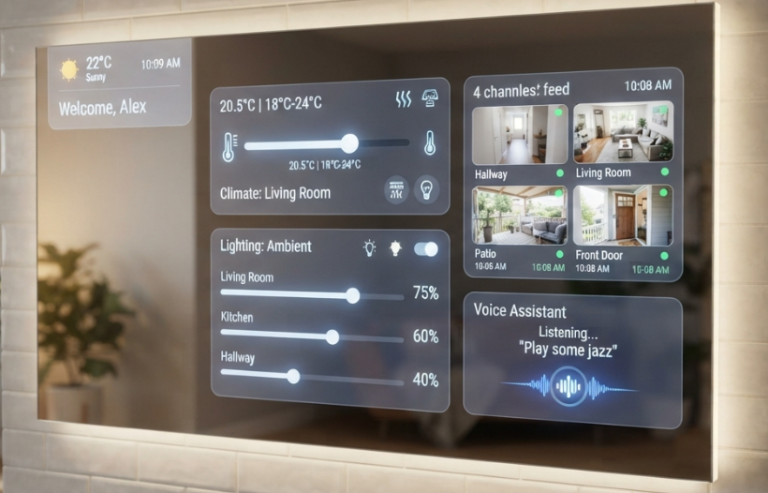
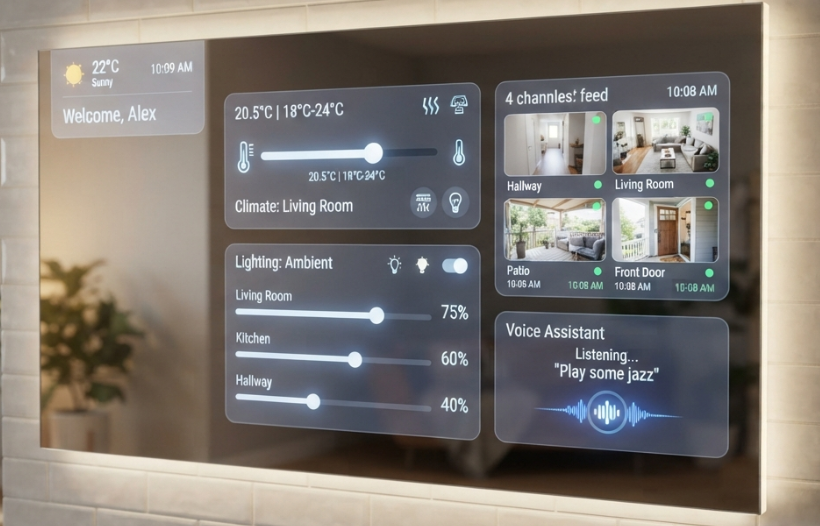
Common products include touch bathroom mirrors, anti-fog beauty mirrors, hotel information mirrors and interactive washroom mirrors. Buyers usually start with 3.2mm, 4mm or 5mm depending on panel size and frame support. Compact appliance panels may use 1.1mm-3.2mm. The main pain points are a visible black screen border when the display is off, weak touch response, color cast on skin tones, bathroom humidity and cleaning durability. A custom black silk-screen border can hide the inactive display area and cables. The non-coated glass side should face the user so the coating remains protected behind the substrate. An approved project reference includes thin mirror display panels for a Korean appliance company's high-end smart refrigerator and bathroom mirror products, with emphasis on transmission, neutral color and processed delivery.
Commercial Displays and Transport Hubs
Advertising machines, airport guidance displays, highway service-area screens and smart fitting mirrors need better impact resistance and stable visibility under changing light. A 5mm or 6mm tempered route is a common project starting point, subject to panel size and mounting. These projects should be reviewed for vibration, dust, frequent cleaning and screen heat management. The glass coating has very low absorption, but the complete enclosure still needs ventilation and thermal design. The Hebei Expressway Group advertising-machine reference used 5mm/6mm high-strength T30 tempered mirror display glass for dusty, high-vibration, semi-outdoor conditions.
Outdoor Digital Architecture and Scenic Areas
Outdoor digital walls and interactive tourism displays need more than weather-resistant coating. The project team must coordinate glass thickness, structural support, laminated or IGU safety construction, edge sealing, drainage, maintenance access, lifting and crate design. North One Glass can review jumbo coating up to 3300 x 16000mm, but final finished size depends on processing, transport and installation feasibility. Large sheets should be evaluated from the drawing stage rather than after the facade structure is fixed. An approved Inner Mongolia grassland scenic-area project exposed the mirror display exterior to large day-night temperature changes, wind and sand. This type of environment is why coating durability, edge protection and enclosure design must be evaluated together.
How to Select the Route by Pain Point
If touch failure is the main risk, specify non-conductive dielectric coating and test the complete sensor assembly. If the black display rectangle is visible when off, review T30/R70, screen position and silk-screen border design. If brightness is weak, compare T30/R70 with T50/R50 and confirm the actual display luminance. For humidity, transport hubs or outdoor use, review coating orientation, cleaning chemicals, edge protection and enclosure design. For public or overhead installations, safety construction and local glazing requirements take priority over the lowest glass price.
Export Packing and Delivery
Processed panels are packed in fumigation-free plywood crates with moisture-resistant separation, anti-mildew protection, internal cushioning and secure fixation. Large or mixed-size panels need a packing list and crate layout so installers can unload in sequence without repeatedly handling every sheet. Packing reduces transport risk but does not replace receiving inspection. Buyers should photograph the crate before opening, check shock or tilt indicators when used and inspect the glass according to the agreed delivery procedure.
What to Send for Application Review
Send the use place, screen model and brightness, touch requirement, finished dimensions, quantity, holes and cutout drawing, black-border artwork, safety route, mounting method, environment and destination. This lets the factory recommend thickness and processing instead of quoting an unsuitable generic sheet.
FAQ
Can black silk-screen printing hide the internal display frame?
Yes. A custom border can be printed around the non-display area according to the CAD artwork, leaving only the active screen window visible.
Can mirror display glass be laminated or made into an IGU?
Yes, PVB/SGP lamination and insulated-glass construction can be reviewed. The glass build-up and coating orientation must match the safety and optical requirements.
Is 3300 x 16000mm available as a finished facade panel?
It is the maximum jumbo coating capability for project review, not an automatic finished-panel promise. Processing, transport, lifting and installation feasibility determine the final deliverable size.