How Temperable Mirror Works: Manufacturing, Tempering and Quality Inspection
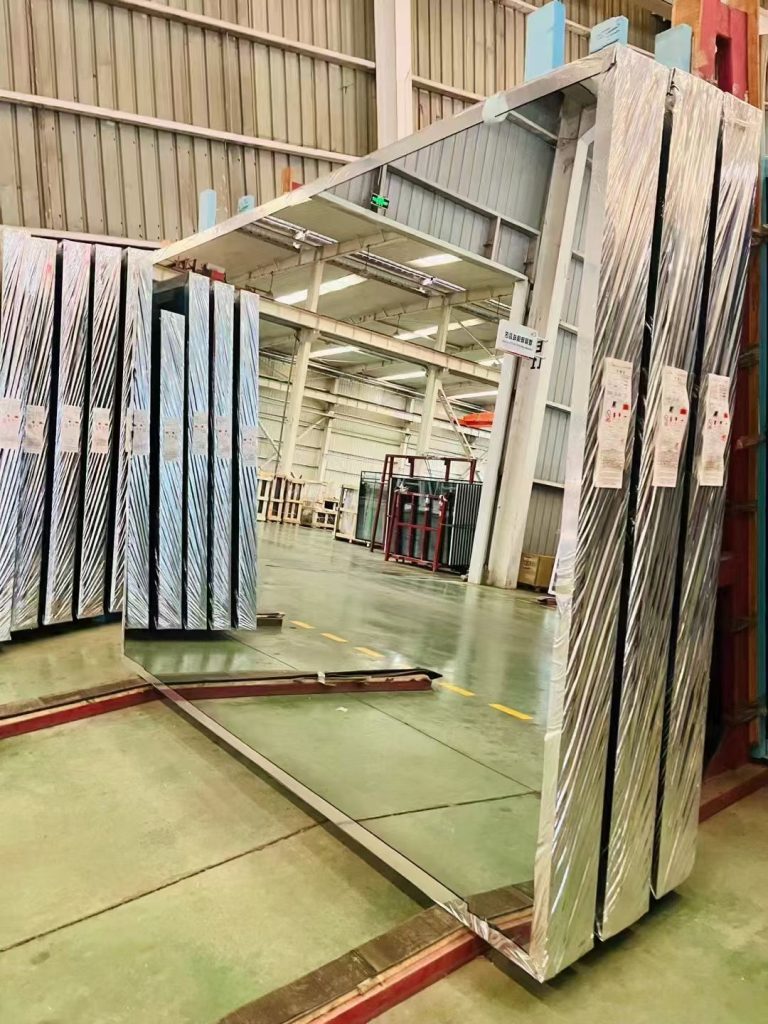
Temperable Mirror works by replacing traditional silver or aluminum mirror backing with a vacuum-sputtered hard coating. Weather-resistant metals and metal oxides are deposited uniformly onto high-quality float glass in an ultra-clean vacuum. Because there is no conventional backing paint to burn or peel, the glass can be cut, edge-ground, drilled, CNC processed and then physically tempered above 600°C.
Manufacturing Process
| Step | Process | Quality Purpose |
|---|---|---|
| Substrate selection | Low-iron, clear, grey or bronze float glass | Controls base color, appearance and project cost. |
| Cleaning | Deionized-water cleaning and drying | Prepares the glass for stable coating adhesion. |
| Vacuum coating | Offline vacuum magnetron sputtering deposits hard metal and metal-oxide layers | Creates mirror reflection without ordinary backing paint. |
| Processing | Cutting, edging, beveling, drilling, CNC shaping, laser de-coating or sandblasting as needed | Completes all shape work before heat treatment. |
| Physical tempering | High-temperature tempering above 600°C or approximately 600-700°C | Increases strength and creates safer blunt-particle breakage. |
| Inspection | Optical, scratch, adhesion, color and weathering checks | Confirms the coating survived processing and the project route. |
Why the Coating Can Be Tempered
Traditional mirrors rely on silver or aluminum layers protected by backing paint. That construction can burn, peel or blacken during high-temperature tempering. Temperable Mirror uses an inorganic hard coating bonded to the glass. The coating is designed to avoid peeling, blistering, discoloration and edge chipping during the approved processing and tempering route.
Key Performance Values
| Parameter | Confirmed Value | Buyer Meaning |
|---|---|---|
| Standard optics | T0-5/R70-75; common Tv about 1.4% and Rv about 70.5% | Strong mirror effect with low visible transmission. |
| Scratch test | 5000 cycles using 0000# steel wool under 1000 g load | Supports processing, cleaning and surface durability review. |
| Color stability | ΔE < 0.5 before and after tempering | Large panels remain visually consistent after furnace processing. |
| Tempering result | Strength increases about 3-5 times; fragments become small blunt particles | Improves safety for public and architectural applications. |
| Weather resistance | Acid, alkali, salt-spray and outdoor black-edge resistance | Useful for wet, coastal, outdoor and scenic-area applications. |
| Reports | SGS and CNAS third-party testing according to the supplied text | Buyers can request the relevant report for the selected order. |
Quality Problems to Check
- Color difference before and after tempering.
- Coating peeling, blistering, edge chipping or black-edge formation.
- Scratches after steel-wool or cleaning simulation.
- Pinholes, coating spots, haze, distortion or uneven reflection.
- Hole cracks, edge defects or thermal breakage risk after drilling and tempering.
- Moisture or salt-spray corrosion for bathroom, coastal and outdoor projects.
Sample and Batch Approval
For a new project, approve a sample after the same processing route planned for mass production. If the project needs holes, bevels, CNC shapes, frames or LED channels, do not approve only a small raw sheet. Test cutting, edging, tempering, optical appearance, scratch resistance, acid/alkali immersion and cleaning compatibility before bulk order.
Buyer Questions for Suppliers
- Is this a true temperable coated mirror or an already tempered mirror?
- Can the coating survive cutting, edging, drilling and physical tempering?
- What are the before/after tempering color values?
- What scratch, adhesion, salt-spray and weathering reports can be supplied?
- What warranty applies to raw sheet and tempered finished mirror?
- What happens if transport breakage occurs?
North One Glass Capability
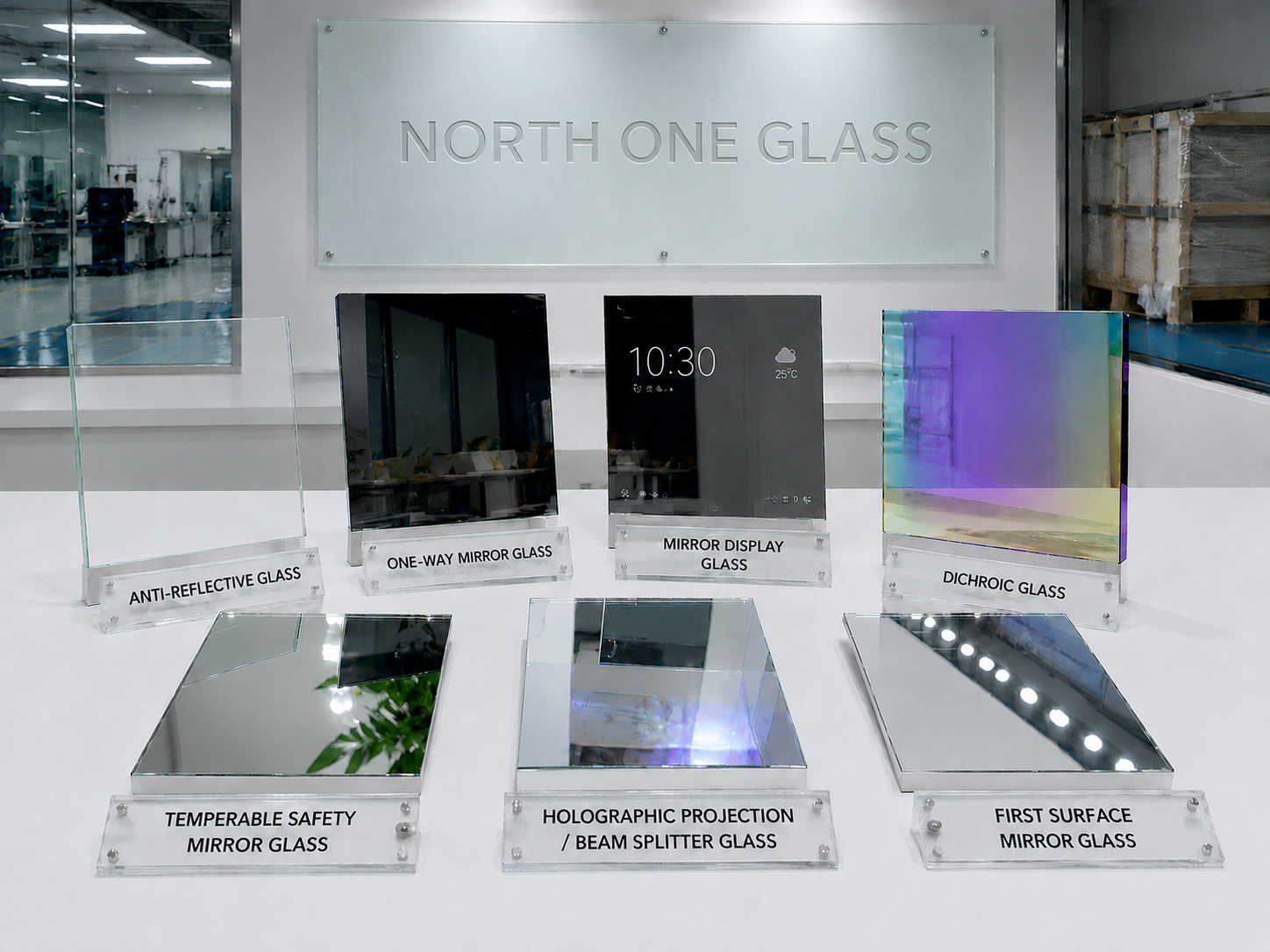
North One Glass produces Temperable Mirror with custom cutting, CNC edge processing, drilling, laser de-coating, lamination, IGU construction and optional frame/LED module integration. For order review, use the contact page.
FAQ
Q: What makes temperable mirror different from ordinary mirror?
A: The coating route is designed for processing before physical tempering, while ordinary mirror backing cannot tolerate that process.
Q: What temperature can the coating tolerate?
A: The supplied text states high-temperature physical tempering above 600°C, with the approved technical context around 600-700°C.
Q: What does ΔE < 0.5 mean?
A: It means the mirror color has no visible color deviation before and after tempering under the stated comparison.
Q: What scratch test is used?
A: The supplied text states 5000 reciprocating cycles using 0000# steel wool under 1000 g load, with no scratches, peeling or delamination.
Q: Can buyers request reports?
A: Yes. The supplied text references SGS and CNAS third-party testing, and buyers should request the report matching their order.
Q: Should samples be tempered before approval?
A: Yes. If the final order will be tempered, approve a tempered and processed sample, not only raw sheet.
Q: Can every shape be tempered?
A: No. Holes, notches, size, thickness, edgework and furnace route must be reviewed before production.