One-Way Mirror Glass FAQ for Buyers
One-way mirror glass is simple to describe but easy to purchase incorrectly. Buyers often ask for a square-meter price before confirming the details that actually decide performance and cost: lighting, viewing direction, optical ratio, thickness, size, tempering, lamination, packing and installation. This FAQ gives practical answers for procurement teams, contractors, glass processors, appliance-panel buyers, observation-room builders and mirror-house project teams.
Q1: What is the difference between one-way mirror glass and a normal mirror?
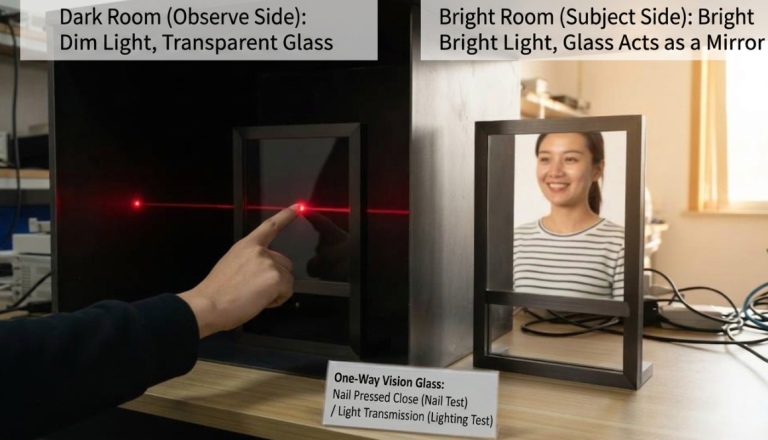
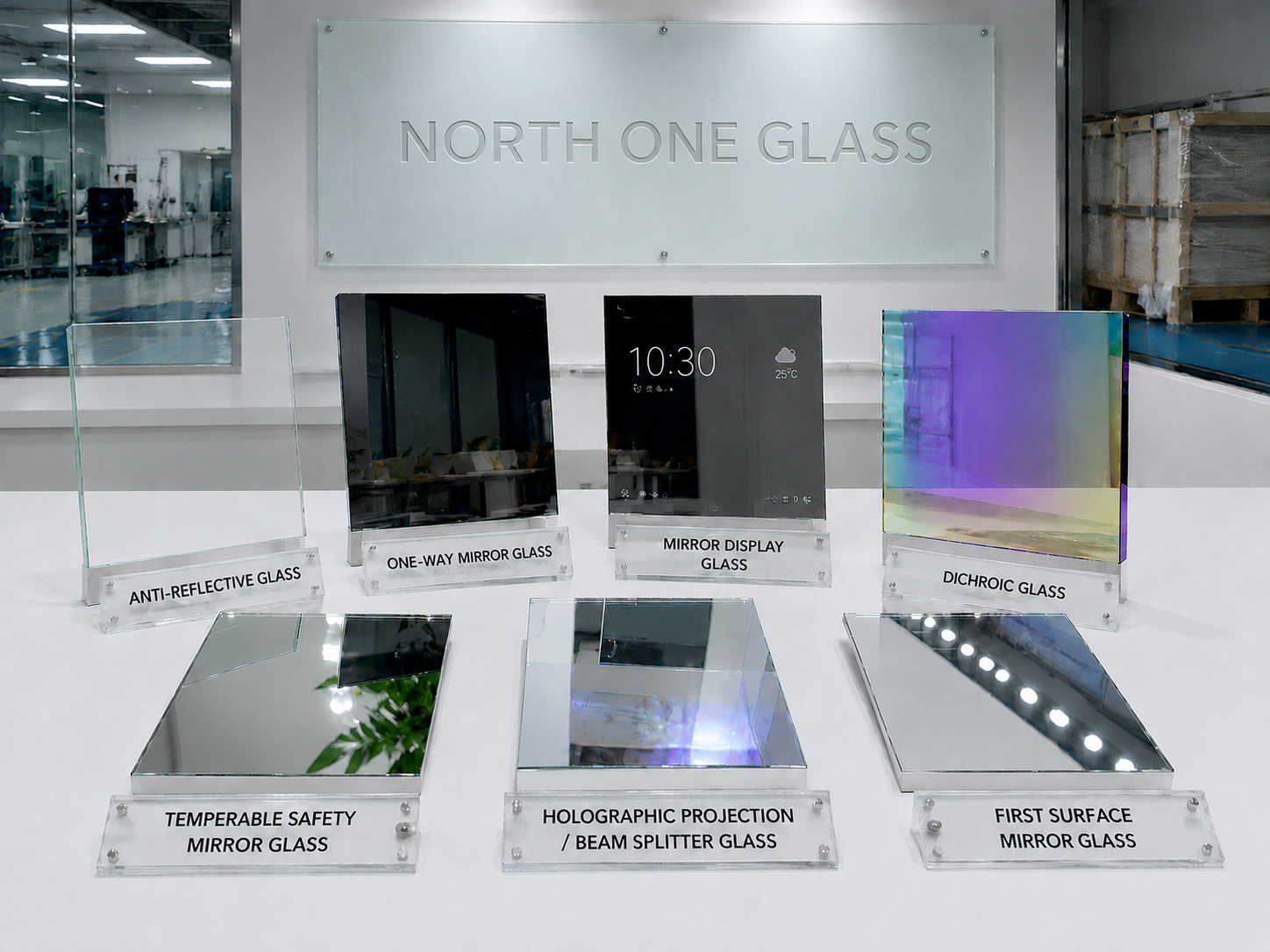
A normal mirror is designed to reflect and block vision through the glass. One-way mirror glass is semi-reflective. It reflects part of the light and transmits part of the light. When one side is much brighter than the other, the bright side mainly sees a mirror effect, while the darker side can see through. Without the lighting difference, the one-way effect becomes weak.
Q2: Is one-way mirror glass the same as two-way mirror glass?
In most buyer searches, yes. One-way mirror and two-way mirror are market terms for the same practical principle. The important questions are not the name, but the optical ratio, coating side, lighting condition, viewing direction and application.
Q3: What is the standard optical performance?
North One Glass commonly uses a reference route around 15% visible light transmission and 75% reflection. Custom transmission/reflection ratios can be reviewed according to the project. Do not choose the optical ratio only from a catalog. The final effect depends on room lighting, glass size, background color, viewing distance and installation condition.
Q4: Does one-way mirror glass work at night?
It can, but only if the lighting condition is controlled. If the observation side becomes brighter than the observed side, the effect can weaken or reverse. For windows and facades, night use is especially important. During the day, the outside may be brighter. At night, the interior may be brighter. Tell the supplier whether privacy is required during the day, at night or both.
Q5: How much does one-way mirror glass cost?
Reference factory prices for common raw or tempered routes may range around $10/m2 to $20/m2 depending on thickness and processing route. For example, 2mm raw sheet can be around $10/m2, 3.2mm tempered finished glass around $15/m2, and 4mm-10mm tempered finished glass around $10-$20/m2. Laminated, insulated, extra-thick and jumbo outdoor constructions require custom quotation. Final price depends on finished size, cutting yield, tempering, holes, edgework, lamination, IGU construction, packing, order quantity and trade term.
Q6: Can one-way mirror glass be tempered, cut and drilled?
Yes, the correct coated glass route can be reviewed for tempering, cutting, edge grinding, drilling, lamination and insulated glass construction. The buyer should confirm processing before production because cutting sequence, hole position, thickness and finished size affect feasibility and cost. Do not assume PET mirror film can replace this route. Film is applied after glass installation and cannot become physically tempered glass.
Q7: What thickness should I choose?
Use the application as the starting point:
| Application | Common Review Route |
|---|---|
| Power-bank, laptop and small appliance panels | 1.1mm-3.2mm |
| Infinity mirrors and wine cabinets | 4mm-10mm tempered |
| Observation rooms and professional viewing windows | 8mm-12mm laminated or safety route |
| Outdoor mirror houses and facades | 12mm-15mm tempered, laminated or IGU route |
| High-rise curtain wall or outdoor suspended structure | laminated safety glass, such as PVB/SGP route |
Thickness is not only about price. It affects strength, safety, weight, handling, packing and installation.
Q8: Can one-way mirror glass be used outdoors?
Outdoor use should be reviewed as a project. The factory needs to confirm thickness, edge protection, safety construction, coating durability, installation method, packing route and transport risk. For outdoor mirror-house and facade projects, buyers often review extra-thick tempered glass, laminated glass or IGU construction instead of thin indoor panels.
Q9: What is the maximum size?
North One Glass can review jumbo coated glass up to 3300mm x 16000mm. Final feasibility depends on product route, thickness, processing, handling, packing and transport. For very large glass, send drawings early. Large size changes production risk, crate design, loading method and installation planning.
Q10: Which side should face the bright room?
The reflective/coated side and bright side should be confirmed before installation. For observation-room style use, the observed side should be brighter, and the observation side should remain darker. North One Glass can provide direction labels according to the confirmed product route, but the buyer should still share the room layout, lighting condition and viewing direction.
Q11: How is export packing handled?
Export glass should use strong wooden crates, suitable interleaving, internal cushioning and secure loading. For mirror-coated glass, surface protection and moisture control are also important. Packing is not a minor cost. Weak packing can create breakage, scratches, claim disputes and project delays.
Q12: What should I send for quotation?
Send:
- exact length and width for each panel;
- thickness or glass structure;
- quantity per size;
- raw sheet or finished glass;
- processing: tempered, edgework, holes, lamination, IGU;
- application and use place;
- bright side, dark side and viewing direction;
- indoor or outdoor use;
- destination port and trade term;
- drawings, photos or installation sketch if available.
When Not to Choose One-Way Mirror Glass
Do not choose one-way mirror glass if you cannot control lighting but need guaranteed privacy at all times. Do not choose it if a simple curtain, blind, normal mirror, tinted glass or privacy film is enough for a temporary low-risk job. One-way mirror glass is strongest when the project needs a manufactured glass product, controlled observation, premium mirror appearance, safety processing or long-term durability.