Coated one-way mirror glass and reflective window film can both create a mirror-like appearance on the brighter side and allow observation from the darker side. They are not equivalent materials. Coated glass is manufactured as the optical component itself; film is applied to a glass surface and adds another material, adhesive, and installation step.
TL;DR
- Choose coated one-way mirror glass when the project needs a controlled optical balance, factory fabrication, repeatable appearance, and a durable glass-based component.
- Consider film when retrofitting existing glazing is the main constraint and the project accepts the film system's installation and service limits.
- Neither option creates privacy without lighting control. The observed side must remain brighter than the observer side.
How the one-way effect works
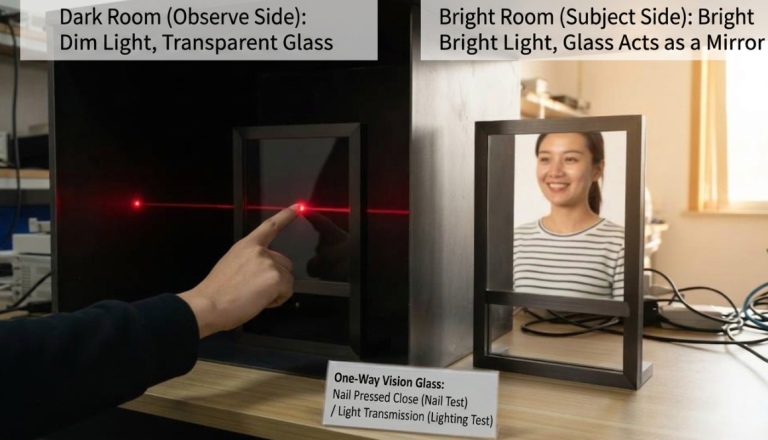
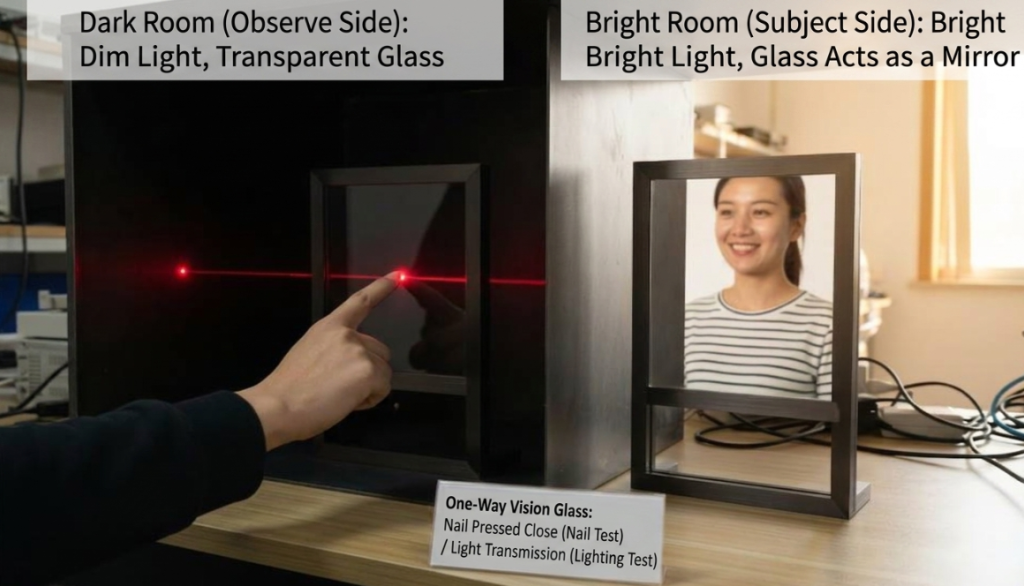
The effect depends on relative illumination, not a one-direction property of the material. When the public or subject side is much brighter, it sees a stronger reflection. The darker observation side receives enough transmitted light to view through the panel. If the observation room becomes brighter, or the viewed side becomes dark, privacy weakens and may reverse. For coated glass, transmission and reflection targets are part of the product selection. Film performance also depends on the base glass, film construction, adhesive, installation quality, and aging. Compare complete assemblies under the same lighting rather than comparing unrelated catalog numbers.
Project decision points
Use these questions before selecting a route:
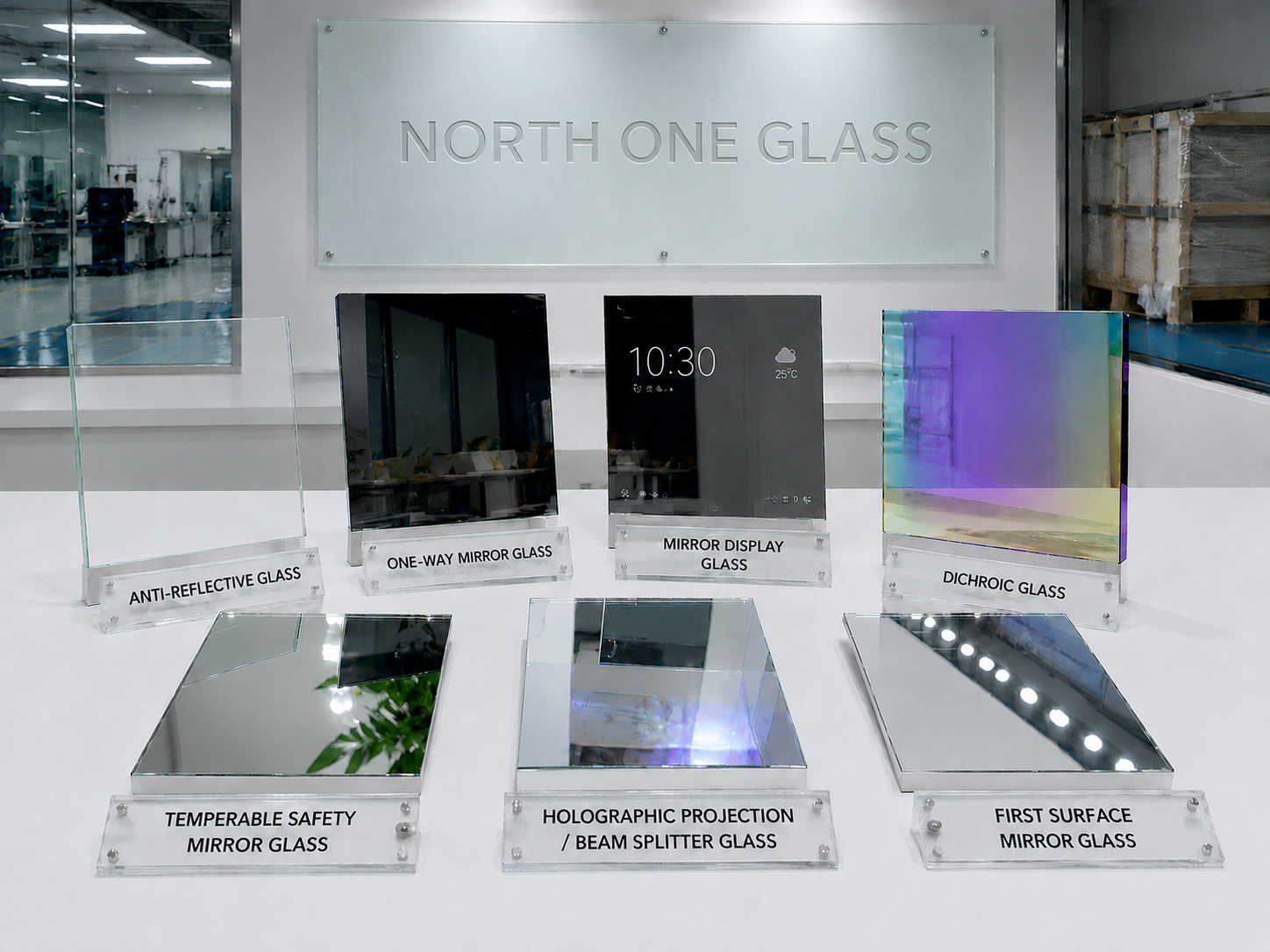
The One-Way Mirror Glass category explains the lighting and specification logic. The T15/R75 observation-room product provides a concrete coated-glass starting point. Related display applications should be checked separately in the Mirror Display Glass category.
- Is this a new fabricated panel or a retrofit to installed glass?
- What light levels can be maintained on both sides during operation?
- Are edgework, holes, notches, lamination, or insulating-glass assembly required?
- How will the exposed surface be cleaned and protected?
- Is appearance consistency across multiple panels or replacement batches important?
- Which transmission, reflection, color, and distortion checks define acceptance?
Avoid a false privacy promise
Do not describe either material as permanent one-way privacy. A responsible design includes lighting control, room layout, sightline testing, and an operating plan for unusual conditions such as lights being switched off on the bright side. The final mock-up should reproduce the intended room, not just a flashlight demonstration.
FAQ
Does one-way mirror glass work at night?
It works only while the viewed side remains substantially brighter than the observer side. Night conditions often require deliberate lighting control.
Is mirror film always cheaper than coated glass?
Material price alone is not a complete comparison. Include base glass, installation, replacement, fabrication, optical consistency, cleaning, and expected service conditions.
What information is needed for a quotation?
Send the application, panel drawing, size, glass build-up, target transmission and reflection, lighting plan, processing, quantity, and destination through the contact page.